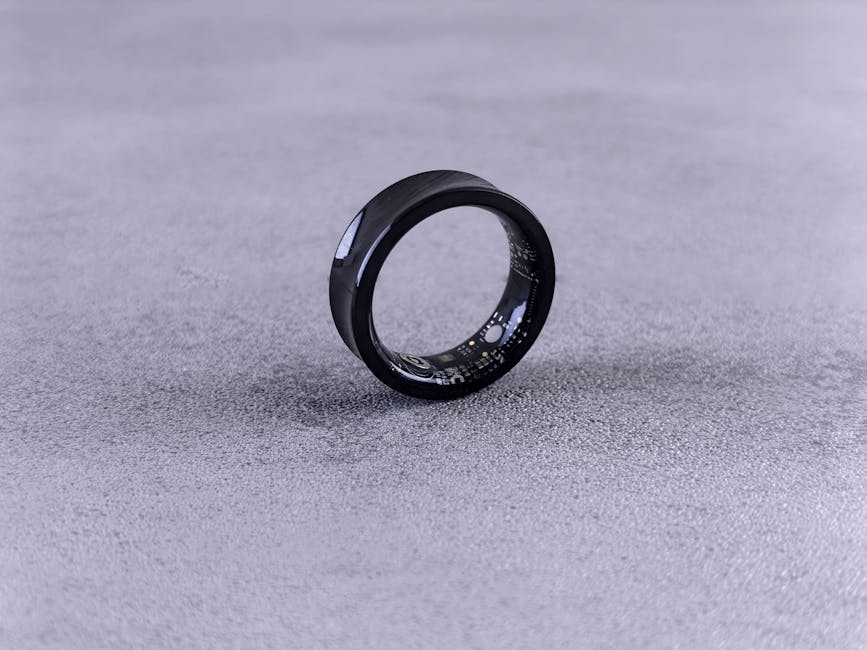
Are Smart Rings Worth It? An Honest Decision-Making Guide
Smart rings are not for everyone. A clear-eyed look at who they suit and the three use cases where they earn the £200–£400 price tag.
Smart rings are having a moment. The hardware is good, the apps are mature, and the form factor is genuinely more pleasant than a watch on the wrist all day. But spending £200–£400 on what is essentially a sleep and recovery tracker is not a slam-dunk for everyone, and the marketing across the major brands tends to present every potential use case as the right one for you. This guide takes the opposite view: smart rings earn their price in three specific use cases and are an expensive ornament in three others. Working out which group you are in before you buy will save you a couple of hundred pounds and the buyer's remorse that drives the lively second-hand market.
The three cases where smart rings genuinely earn their price
The case for a smart ring is strongest when the use case plays to the form factor's specific strengths: a sensor that stays on the finger 24/7 without bothering anyone, a multi-day battery, and overnight measurement quality good enough to track trends week-over-week. Three reader types reliably get their money's worth.
If you are willing to change behaviours based on what the ring shows (later bedtime → worse REM the next morning; one glass of wine → lower HRV for 36 hours; warm bedroom → fragmented sleep), the ring's nightly data becomes a feedback loop on the inputs you control. The data is not clinical-grade — no consumer wearable is — but the trends are reliable enough to support better sleep decisions over weeks and months.
Heart-rate variability is a useful summary signal for autonomic nervous-system recovery, and the ring captures it overnight without interfering with anything else. If you already have a phone for notifications and timekeeping but you want continuous-wear health data without a wrist device, the ring is the cleanest path. Endurance athletes and stress-managers use this pattern heavily.
Watch sensitivity is real — some people genuinely cannot stand a watch on their wrist day and night. Strap allergies, sleep-disturbed-by-watch-weight, jewellery preferences. A ring sits in the place a ring already sat and disappears from conscious awareness within a week. For this reader, the ring is the only way to get any continuous-wear health data.
The three cases where smart rings are a poor fit
The marketing tends to leave these cases out, but they are where most returns and drawer-resident rings come from. Recognising yourself in any of these means the ring is the wrong product, not the wrong brand.
No consumer ring is a medical device. The PPG sensor that drives HRV, resting heart rate and SpO2 is an optical approximation that is reliable for trends but not for diagnostic decisions. If your reason for buying is a specific clinical concern — suspected arrhythmia, sleep apnoea screening, blood-pressure monitoring — the right next step is a GP, not a ring. ECG rings exist (the Galaxy Ring is one) but they take spot readings on demand and still are not a continuous medical monitor.
Rings have no screen, no notifications, no GPS, no contactless payments, no music control, no apps. They are a 24/7 sensor that lives in the partner app on your phone. If most of the value you imagine from a wearable is glanceable notifications or phone-free runs, you want an Apple Watch / Garmin / Pixel Watch, not a ring.
Smart rings are tougher than they look but the active surface still gets scratched and dented. Manual labourers (especially anyone using tools or operating machinery), healthcare workers (frequent glove changes plus alcohol gel ruins finishes), musicians (guitar players, percussionists), bouldering and climbing enthusiasts, and anyone who has to remove a ring repeatedly through the day will not get a year out of a £300 device. The ring is also impossible to wear during MRI scans and most contact sports.
The honest cost calculation
The headline price (£250–£400 depending on brand and finish) is the start of the conversation, not the end. Smart rings have a real ongoing cost profile that the marketing rarely highlights:
Some brands gate the advanced metrics and insights behind a monthly subscription (Oura is the most prominent: £5.99/month at the time of writing). Others (Ultrahuman, RingConn, Samsung) offer the full app feature set with no subscription. Over three years of ownership, an Oura ring with subscription costs roughly £200 more than a no-subscription competitor.
Smart-ring batteries last 4–7 days per charge but degrade like any lithium cell. After roughly two to three years the battery life drops to a noticeable extent, and most brands do not offer a battery-replacement service — the sensor and battery are integrated and the whole unit has to be replaced. Plan for a £200+ replacement every three years if you intend to keep using one long-term.
If your finger size changes (weight loss, hormone shifts, the original sizing was wrong), the only options outside the swap window are a paid re-size (typically £20–£40) or selling-and-rebuying. See our sizing guide for the proper way to avoid this on first purchase.
A Wahoo Tickr or Polar H10 chest strap (£60–£90) plus a free app gives more accurate HRV than any ring, full stop. The trade-off is that you have to put it on every night. Some readers will happily pay £300 to avoid that ritual; others will not.
Decision framework: who should buy what
The clean test is to write down what you actually plan to do with the data. Three behavioural patterns sit at the heart of getting value from a ring:
Three behavioural tests for buying a smart ring
If you can honestly answer yes to at least two of the three, the ring will pay back its cost in better decisions within the first year. Honest no on all three usually means the ring ends up in a drawer.
Will you actually look at the data daily for the first three months?
Smart-ring value comes from establishing your baseline (two to four weeks) and then noticing deviations. Users who open the app once a week never develop the pattern-recognition that drives behavioural change. If 'too busy to check' is a real description of your life right now, the ring is the wrong purchase.
Are you willing to change behaviour based on the data?
If the ring shows your HRV is consistently 20% below baseline on weeks you drink three or more nights, are you willing to drink less? If it shows poor REM the nights you eat dinner after 9pm, will you change dinner time? Users who treat the data as background noise rather than feedback do not benefit from the ring.
Do you have a specific question the ring can answer?
Generic curiosity wears off in two months. Specific questions — 'is my recovery actually adequate for this training block?', 'is alcohol affecting my sleep more than I think?', 'how does my menstrual cycle align with my energy?' — produce sustained engagement and real behaviour change. Pick the question before you pick the ring.
How much accuracy do you actually need?
The accuracy ceiling on every current-generation smart ring is roughly the same: optical PPG sensors on the finger, validated against polysomnogram or chest-strap references with broadly similar error rates. Across 2024–2026 independent comparisons (covered in Smart Ring Health Metrics Explained), the patterns are consistent across brands:
Total sleep time and sleep efficiency match polysomnogram-graded reference within 5–10% on a single night, across every brand. If you want to know whether you actually slept 6 or 8 hours, any ring will tell you.
Light and deep classification is correct around 70–80% of the time vs polysomnogram. REM detection is noisier (50–70% agreement). Trend across many nights is meaningful; a single night's REM percentage is not.
Resting HR (the metric the ring publishes daily) is accurate within 2–3 bpm vs chest-strap reference. During exercise the optical sensor lags, but rings do not promise exercise HR — the watch / chest strap is the right tool for that.
The overnight HRV number from a smart ring differs from a chest-strap HRV measurement by 10–25% in absolute terms but tracks the same shape over weeks. As long as you compare your reading to your own baseline (not to a friend's ring), the data is useful.
Daytime spot SpO2 readings are within 2–3% of pulse-oximeter reference. Continuous overnight SpO2 graphs are too noisy to use as a sleep-apnoea screening tool, and most brands now position them as long-term trend rather than diagnostic.
Rings do not measure your absolute body temperature; they measure deviation from your own baseline overnight. Useful for cycle tracking, early-illness signals, and recovery monitoring; not useful as a 'is my fever 38.2 degrees' check.
What about as a complement to a smartwatch?
This is the most common ring buyer in 2026: someone who already has a watch (Apple, Garmin, Pixel) and wants a second data source. The argument for is that two independent measurements catch sensor errors better than one, and a ring captures sleep data more reliably than a watch worn to bed (smaller, lighter, no haptic alerts to wake you). The argument against is cost — £300 to triangulate the data your watch already produces is hard to justify unless the sleep-tracking gap is a specific issue.
If the watch you already own does not include reliable sleep tracking (older Apple Watches without sleep stages, basic Garmins), the ring fills that gap cleanly. If your watch already produces decent sleep data and you are mostly looking for accuracy validation, save your money — read the watch data more carefully instead.
The detailed comparison sits in Smart Ring vs Smartwatch: The Honest 2026 Comparison.
Frequently asked questions
How long before I see value from a smart ring?
Are smart rings worth it if I already have an Apple Watch / Garmin?
Can a smart ring replace a fitness tracker?
Will my smart ring still be useful in three years?
Is the subscription on Oura a deal-breaker?
What if I am not sure I will use it?
Should I wait for the next generation?
The bottom line
Smart rings are worth the money for sleep-curious users willing to act on the data, HRV trackers who do not want a watch on their wrist, and watch-haters who want continuous-wear health data anyway. They are a poor fit for anyone wanting clinical-grade accuracy, a smartwatch in ring form, or a wearable for an active job that destroys hardware. Pick the right buyer profile before the brand and you will end up using the ring; pick wrong and the ring ends up in a drawer.
If you have decided the ring is right for you, the next steps are sizing properly first time (our sizing guide), understanding the metrics so the data is useful rather than noise (health metrics explained), and picking the brand and model with the right feature-vs-price trade-off (buying guide).