Can a Smart Ring Detect a Fever? (2026 Answer)
Rings can't take your temperature, but they can often see a fever coming. How skin-temp baselines and Oura's Symptom Radar work, with limits.
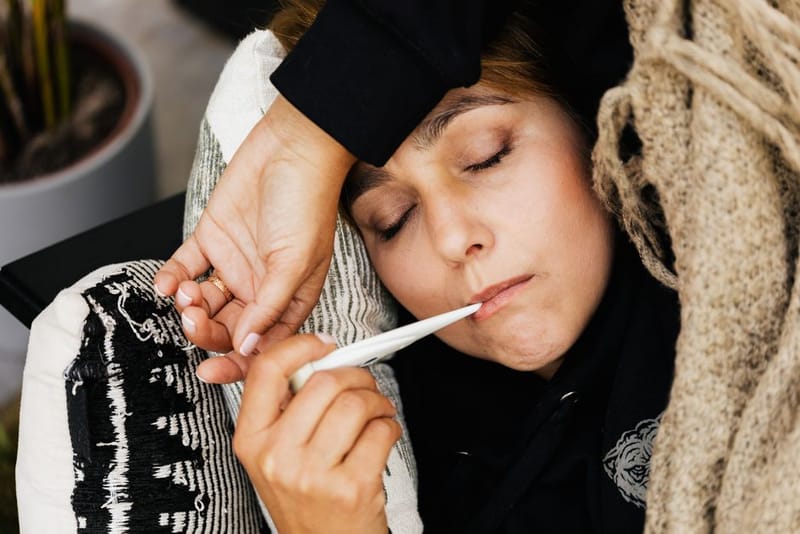
The fever question has a genuinely interesting answer, because it splits into two different capabilities: measuring a temperature (rings cannot, meaningfully) and noticing that yours is drifting away from normal (rings are arguably the best consumer device ever made for this). Here is how it works, which rings do it, and where the limits sit.
What does a smart ring actually measure?
Skin temperature deviation, not core temperature
A thermometer measures your core body temperature on an absolute scale: 38C is a fever whoever you are. A ring measures skin temperature at the finger, which runs cooler than core and swings with the room, your bedding and your circulation. An absolute skin reading would be nearly useless - so rings do something smarter: they log your overnight skin temperature every night, build a personal baseline, and report the deviation from it. A reading of +0.7C above your own baseline is meaningful even though the raw number is not. That is why the ring apps show a trend chart rather than a thermometer-style figure.
Can a ring warn you before you feel ill?
Oura's Symptom Radar, and what the research found
This is where rings earn their keep. Fevers usually build measurably before you feel them, and a device worn all night is perfectly placed to see it. Oura's Symptom Radar (Gen 3 and Ring 4, launched after the UCSF TemPredict study that began in 2020) combines temperature trend, respiratory rate, resting heart rate and heart-rate variability into a morning assessment of no, minor or major signs of cold- or flu-like strain. Oura reports detecting pre-symptomatic signs of fever in roughly 76% of people, typically a day or two before symptoms land. Other rings surface the same raw signal less formally - Ultrahuman, RingConn and Samsung all show overnight temperature deviation charts you can read yourself: a spike alongside elevated resting heart rate and breathing rate is the classic getting-ill signature.
What are the limits?
Honest caveats before you rely on it
Three things to keep straight. First, no absolute reading: if you need to know whether a child has a 39C fever, use a thermometer; the ring cannot answer that question. Second, temperature deviation has many causes - alcohol, a hot room, late exercise, and (by design) the menstrual cycle all move it; rings that do cycle tracking use exactly this signal, which is also why a single warm night means little without the other metrics moving too. Third, screening is not diagnosis: a 'major signs' morning is a prompt to take it easy and maybe test, not a medical result. The pattern-over-days reading is reliable; any single night is noisy.