HRV Explained: What Your Smart Ring HRV Number Really Means
What HRV measures, why RMSSD vs SDNN matters, what shifts your number, and what NOT to read into a single overnight reading.
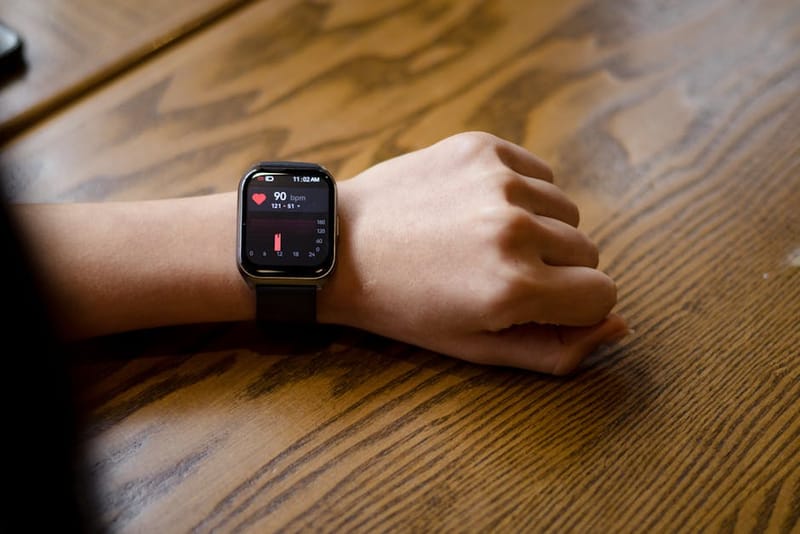
Heart Rate Variability - HRV - is one of the most-discussed smart-ring metrics and the most-misread. Your ring shows a three-digit number every morning; some apps colour it green or red; the implication is that this number tells you whether to train or rest. The reality is messier. HRV is a useful signal about your autonomic nervous system, but the value swings widely between individuals and from day to day, and a single reading on its own carries almost no information. This guide explains what HRV is, why the number on your ring is usually RMSSD rather than the metric clinical research uses, what actually moves your reading up and down, and the readings you should ignore. There are no medical claims in here - for sustained, unexplained changes the right next step is a GP, not a wearable.
What the number actually measures
Your heart does not beat at a fixed interval. The gap between one beat and the next varies by tens of milliseconds - slightly longer on the exhale, slightly shorter on the inhale, in a pattern called respiratory sinus arrhythmia. HRV quantifies that variation.
There are two common ways to express it. RMSSD (root mean square of successive differences) measures the millisecond gap between each pair of consecutive beats, squares those differences, averages them, and takes the square root. SDNN (standard deviation of NN intervals) is the standard deviation of every beat-to-beat interval across the measurement window. RMSSD is dominated by the parasympathetic nervous system and reacts quickly to short-term changes; SDNN reflects total variability over the window and is more commonly used in clinical 24-hour Holter studies.
Almost every smart ring on the market reports RMSSD, often labelled simply as "HRV". Oura, Ultrahuman, RingConn, Samsung's Galaxy Ring app and Amazfit Helio all default to RMSSD measured during sleep. Some apps then convert that raw number into a brand-specific 0–100 "score" or "recovery" rating, layered on top of the underlying RMSSD value.
Why your baseline matters far more than the absolute number
This is the single most important point in this guide: a healthy 25-year-old endurance athlete might have an overnight RMSSD around 80–120ms; a healthy 55-year-old might sit at 25–40ms; both readings are entirely normal for that person. The 2017 Frontiers in Public Health review of HRV norms describes a roughly 4× range across age and fitness for resting RMSSD in healthy adults - so comparing your ring's number to a friend's, or to a number you saw on Instagram, tells you nothing useful.
What matters is your own seven-day moving average and the deviation from it. Most ring apps surface this as "your baseline" or a small +/- delta. A reading 10–20ms below your baseline is meaningful; a reading 10–20ms below someone else's number is not.
The corollary: brand-new users see wildly fluctuating values for the first two to three weeks because the ring hasn't gathered enough data to settle a baseline. Treat your first month of HRV readings as calibration, not as actionable data.
What pushes HRV up and what pushes it down
HRV is sensitive to almost anything that changes autonomic tone. The largest, most consistently documented drivers in the consumer-wearables literature are:
Alcohol
One of the sharpest single-night effects. Even moderate consumption (2–3 standard drinks) within four hours of bed typically drops overnight HRV by 20–40% and elevates resting heart rate for the next 24–48 hours. The drop is reliable enough that ring vendors frequently use it as a demo example.
Sleep quality
Short sleep, fragmented sleep and late bedtimes all lower the next morning's HRV. The relationship runs both ways - chronically suppressed HRV often points to a sleep issue that needs attention before anything else.
Training load
A hard session lowers HRV the following night; an easy session usually has no effect. Multi-day suppression after training is the signal endurance athletes use to flag overreaching.
Illness - often before symptoms
An unexplained 15–25% drop in HRV 12–24 hours before any subjective "I feel ill" can be an early viral-infection signal. Several smart-ring studies during the 2020–2022 period demonstrated this signal at population scale.
Cognitive and emotional stress
Job deadlines, bad news, relationship stress all suppress HRV via the sympathetic branch. The effect is smaller than alcohol but more chronic - sustained stress shows up as a depressed baseline rather than a single low day.
Caffeine timing
Caffeine itself is a mild HRV suppressant; caffeine within six hours of bed compounds with the sleep-disruption effect. Caffeine in the morning rarely shows in next-night HRV.
Late or heavy meals
Eating within two hours of sleep means the digestive system is still active during the early-night measurement window, raising sympathetic tone and suppressing HRV.
Notice the pattern: the things that push HRV down are the same things that disrupt sleep and recovery in general. HRV is not measuring anything mysterious - it is summarising the autonomic-nervous-system cost of yesterday.
What NOT to read into a single reading
Smart-ring HRV is noisy. A single morning's reading can swing 10–25% from the previous night for entirely benign reasons: a different sleep position, a cooler room, a slightly later bedtime, the ring's algorithm picking up a slightly different sleep window. None of that means anything by itself.
Some traps to avoid:
"My HRV is X - should I be worried?"
Almost certainly no, if it is in line with your own baseline. Absolute numbers are not diagnostic. A 7-day moving average that has dropped 20%+ below your normal and stayed there for a week is the signal worth investigating.
"My HRV dropped - should I cancel my workout?"
Maybe, but not based on a single day. A one-day drop usually indicates yesterday's activity (training, alcohol, late night). If you slept well and feel fine, train. If three consecutive days are suppressed, take an easy day.
"My HRV is lower than my friend's - am I less healthy?"
Almost certainly not. Age, sex, genetics, training history, body composition and resting heart rate all push the personal HRV range around by a factor of three or four. Comparing absolute numbers across people is meaningless.
"My HRV jumped 30ms - something is wrong"
A single high reading is no more meaningful than a single low one. Algorithm-driven sleep-window detection occasionally produces an unrepresentative number; the seven-day average smooths it out.
When sustained HRV changes warrant a GP visit
A smart ring is not a diagnostic device and nothing on this page should be read as medical advice. That said, the wearables literature does describe a few HRV patterns that are worth flagging to a doctor rather than ignoring:
A sustained, unexplained drop of 25–40% below your established baseline lasting more than two weeks - without a clear cause like a heavy training block, a new medication or a major life-stress event - is worth mentioning at a routine GP appointment, especially if accompanied by other symptoms (fatigue, breathlessness, palpitations). The same applies to a sudden, persistent change in resting heart rate. These are not emergencies, and the ring data is not diagnostic, but it is useful information for your GP to know about.
What a ring cannot do: detect arrhythmias reliably, diagnose any specific cardiovascular condition, or replace an ECG. If you are experiencing palpitations, chest discomfort or unexplained breathlessness, the right next step is to call NHS 111 or your GP - not to look at your ring.
How HRV connects to the other ring metrics
HRV is the input to almost every "recovery score" or "readiness" rating that smart rings produce. The composite scores blend HRV, resting heart rate, body temperature deviation and sleep duration into a single 0–100 number. They are useful as a quick glance - a sustained low score over several days is the same signal as sustained low HRV - but the underlying components are more informative than the composite.
If you want to understand the other metrics your ring reports - resting heart rate trends, skin temperature variance, SpO2, sleep stages - we cover them alongside HRV in Smart Ring Health Metrics Explained, which sets HRV in context with the other five categories of data a modern ring produces.
Frequently asked questions
Why does my ring report a different HRV number than my chest strap or another ring?
How long does it take a smart ring to establish a useful baseline?
Can I improve my HRV?
Should I rest if my HRV is low on a training morning?
Does the brand of ring matter for HRV accuracy?
Is RMSSD better than SDNN?
The bottom line
HRV is a useful summary of your autonomic recovery state - yesterday's sleep, training, alcohol, stress and illness - measured in a way that is comparable from one of your nights to the next. Treat it as a trend tool, not a daily verdict, and pay attention only to your own baseline. The number on your ring is a feedback loop on the inputs you already know matter: sleep duration, alcohol, training load, stress. It is not a diagnostic instrument, it is not comparable to anyone else's reading, and a single morning's number - high or low - rarely carries much information by itself.