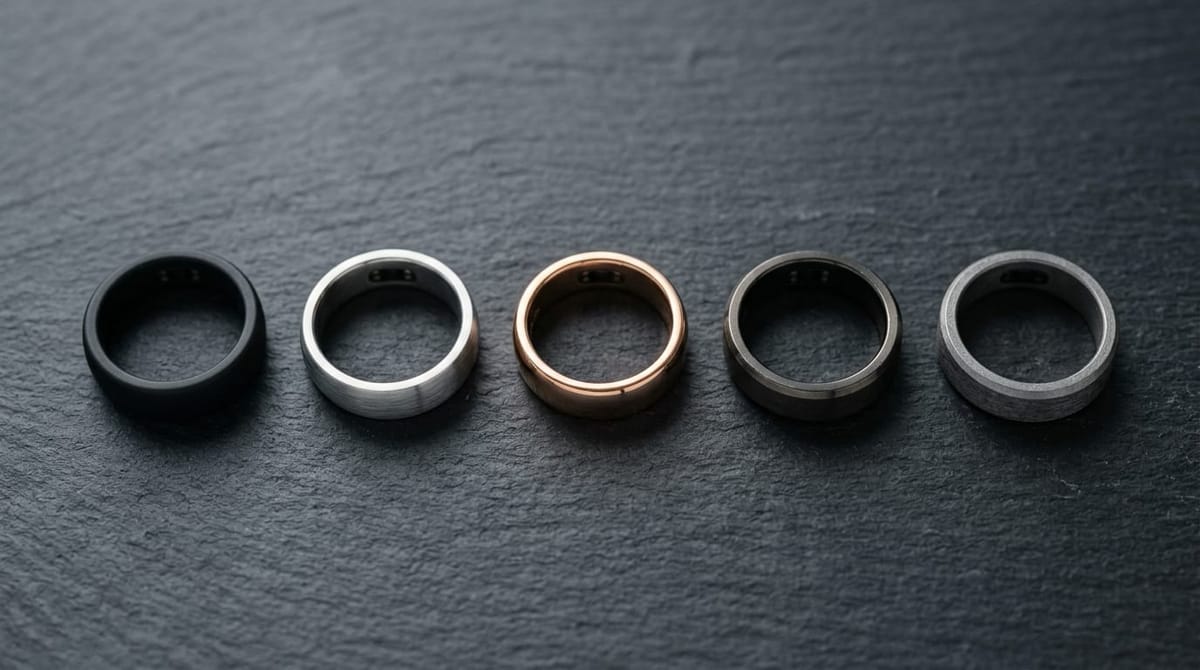
Best Smart Ring for Teenagers (UK 2026)
The best smart ring for a teenager is usually a no-subscription model. A parent's guide to sizing, cost, data privacy for minors and healthy use.

Should you buy a smart ring for a teenager?
A smart ring can suit a teenager better than a smartwatch in some ways. It has no screen and no notifications, so it does not distract in class, and it is discreet enough to be allowed in schools where phones and watches are banned. For a sporty or sleep-deprived teen, the sleep and activity insight can genuinely help.
That said, it is a considered purchase rather than an obvious one. The cost, the growing-finger sizing problem and the sensitivity of a minor's health data all deserve thought before you buy, which is what the rest of this guide covers.
What should parents look for in a teen's smart ring?
Four things matter more than headline features. Avoid a mandatory subscription, because a ring that needs a monthly membership for its data is poor value for a teenager who will not pay it - a one-off-cost ring is the smarter buy. Get the sizing right, remembering that a ring cannot be resized and a teenager's fingers may still be growing, so a mid-teen may get more life from it than a younger child.
Prioritise durability, since teenagers are hard on their kit; titanium copes well, as our durability guide explains. And weigh the data privacy of a minor's health information carefully, which the next sections cover.
Which smart rings are best for teenagers?

Best no-subscription value
Best for Android households

Easiest to live with
As a rule of thumb, a no-subscription ring such as the Samsung Galaxy Ring or RingConn gives a teenager the core sleep and activity tracking without an ongoing bill. A subscription ring like Oura offers deeper data, but the monthly fee makes it a harder sell for a teen unless a parent is happy to cover it. Match the choice to your household's phones and budget rather than the longest feature list.
Do smart rings have an age limit?
Often, yes - in the app terms rather than the hardware. Many health apps set a minimum age for creating an account, commonly in the teens, and some require an adult to agree to the terms for a younger user. This exists because health data is sensitive - UK data protection rules give children's information extra safeguards - and because the readings are designed for adult physiology.
Before buying, check the specific ring app's minimum age and its rules for under-18s, and be prepared to set the account up under a parent's supervision. If a teen is below the app's threshold, that ring is not the right choice yet.
Is smart ring tracking healthy for teenagers?
For many teens it is a positive nudge towards better sleep and more movement. For some, though, constant scores and metrics can tip into anxiety or unhealthy fixation, particularly around sleep, activity or food. The research on wearables and wellbeing is still young, so parental judgement matters.
Keep the focus on habits rather than chasing perfect numbers, and watch for signs that the data is causing stress rather than easing it. A smart ring should be a gentle helper, not a source of pressure - and it is not a medical device or a substitute for professional advice if you have health concerns about your teenager.