How to Clean and Maintain a Smart Ring
A simple weekly routine keeps your smart ring hygienic and accurate. Here is how to clean the band, sensors, and charger without damaging it.
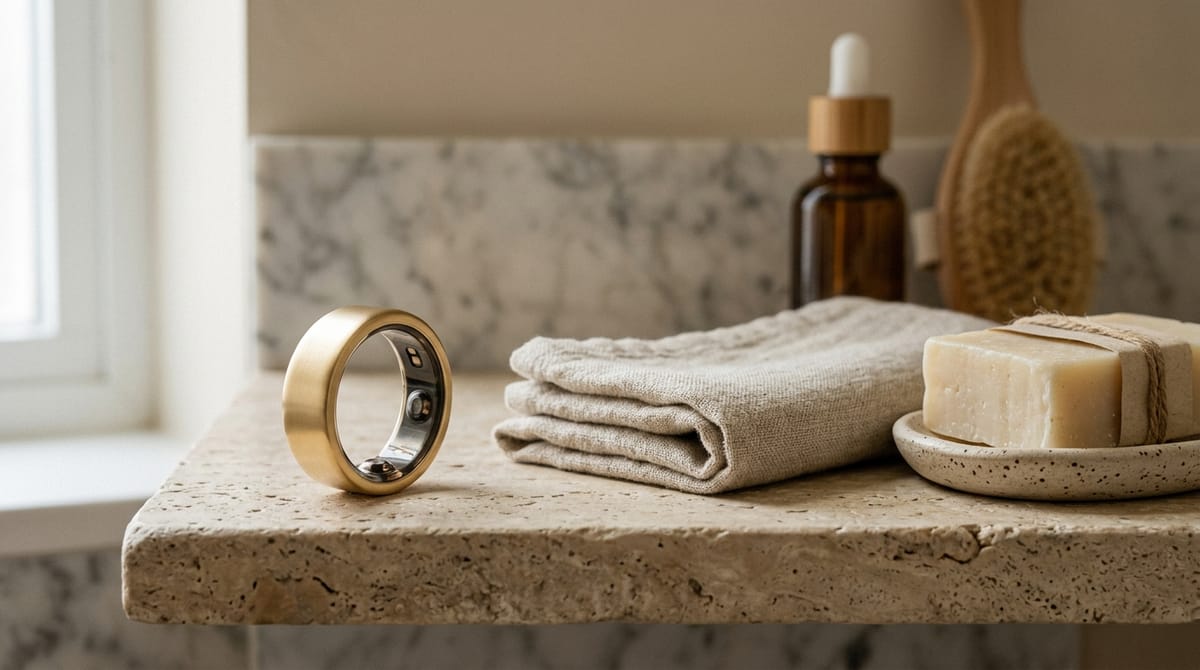
Knowing how to clean a smart ring properly is the difference between a sensor that reads accurately for years and one that drifts, irritates your skin, and charges unreliably. Because the ring sits against your skin around the clock, it collects sweat, soap residue, and dead skin in exactly the spots that matter most: the inner band and the optical sensor window.
How often should you clean a smart ring?
Rinse the ring under warm water daily if you sweat heavily, exercise, or wash your hands often with it on. Give it a proper clean with soap and a soft brush once a week. After swimming in the sea or a chlorinated pool, rinse it the same day, because salt and pool chemicals left to dry on the band accelerate wear on the finish and seals.
The reason for the routine is simple. Moisture and skin debris trapped between the band and your finger are the leading cause of ring rash, a mild contact dermatitis caused by irritants sitting against damp skin rather than by the metal itself.
What is the safest way to clean it?
Rinse under warm water
Hold the ring under warm running water for 20 to 30 seconds to loosen surface residue. Avoid very hot water, which stresses the battery and seals.
Add a drop of mild soap
Use a small amount of fragrance-free hand soap or washing-up liquid. Skip antibacterial gels and anything containing alcohol or bleach.
Brush the inside and sensor window
Work a soft toothbrush gently around the inner band and over the optical sensor bumps, where sweat and skin build up most.
Rinse and dry completely
Rinse off all soap, then pat the ring dry and leave it on a towel for a few minutes. A fully dry ring protects both the charger contacts and your skin.
What damages the finish and sensors?
The most common mistakes are chemical, not physical. Alcohol wipes, hand sanitiser, hydrogen peroxide, and bleach can degrade the PVD coating (the thin physical vapour deposition layer that gives many rings their black, gold, or rose finish) and cloud the sensor window over time. Abrasive cloths and toothpaste scratch the surface and the optical glass, which directly harms reading quality.
Physical damage matters too, but less than people expect. The sensor window is the sensitive part: scratches there scatter the light the ring uses to read your pulse and blood oxygen, so protecting that small area is the single best thing you can do for long-term accuracy.
How do you keep the skin under the ring healthy?
Take the ring off before applying hand cream, sunscreen, or soap, and let your hands dry before putting it back on. Trapped lotion is a frequent trigger for irritation. If you notice redness, move the ring to a different finger for a day or two and make sure both the ring and your skin are completely dry when worn.
Rotating the ring a quarter turn now and then also helps, giving the skin underneath a chance to breathe and stopping moisture pooling in one spot.
How do you care for the charging contacts?
Charging problems are usually dirt, not a fault. The metal contacts on the ring and the charger pick up skin oil and residue that block the connection. Wipe both with a dry or very slightly damp lint-free cloth, and never charge a ring that is still wet from cleaning or swimming.
If charging becomes intermittent, clean the contacts first before assuming the battery is failing. For more on battery behaviour, see our smart ring battery life comparison.
Does the material change how you clean it?
Bare titanium rings are the most forgiving. Titanium is corrosion-resistant and hypoallergenic, so soap and water is all it needs. Coated rings demand more care, because the colour lives in that thin surface layer: harsh chemicals and abrasives wear it away and expose the metal beneath.
Whatever the material, the rule is the same. Gentle soap, a soft brush, thorough drying, and no solvents. That routine suits every smart ring on the market and protects both the finish and the electronics inside.
Frequently asked questions
Can you use alcohol wipes to clean a smart ring?
Can you wear a smart ring in the shower?
Why does my finger get a rash under the ring?
How do I fix a smart ring that won't charge?

Can You Wear a Smart Ring in a Sauna or Hot Tub?
Smart Ring Long-Term Wear
Smart Ring Sizing Guide
Choosing your first smart ring?
Our buying guide covers materials, finishes, and durability so you pick one that lasts.