Smart Ring Blood Oxygen (SpO2) Accuracy Explained
How accurate is a smart ring's blood oxygen reading? What SpO2 sensors measure, how they compare to medical pulse oximeters, and their real limits.
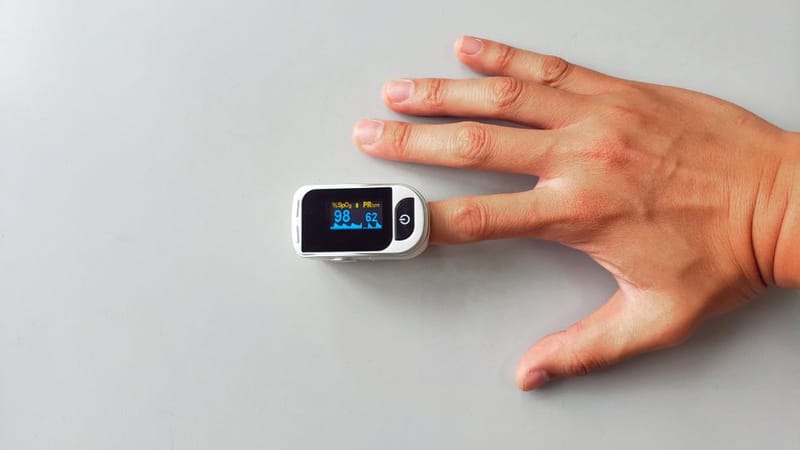
Smart ring blood oxygen accuracy is good enough to spot a trend overnight, but not good enough to make a medical decision. The SpO2 sensor in a ring uses the same basic optics as the clip-on oximeter in a clinic, yet it works in far harder conditions: on a moving hand, through a band that shifts, and often while you sleep. Understanding what it can and cannot tell you matters more than the headline number.
What is SpO2 and why does it matter?
SpO2 (the percentage of your haemoglobin that is carrying oxygen) is a measure of how well your blood is oxygenated. A healthy reading at rest typically sits in the high 90s. Sustained low readings can signal a breathing or circulation problem, which is why hospitals monitor it closely.
In a smart ring, SpO2 is a wellness signal rather than a diagnostic one. Tracked over weeks, an unusual overnight dip might prompt a conversation with a doctor, but the value on any single night is not something to act on alone.
How does a smart ring measure blood oxygen?
Rings use pulse oximetry, the optical technique that shines red and infrared light into the skin and measures how much of each colour the blood absorbs. Oxygen-rich and oxygen-poor blood absorb the two wavelengths differently, and the sensor converts that ratio into an estimated SpO2 percentage.
A medical oximeter shines light straight through a fingertip from one side to the other. A ring instead reads light reflected back from the side of the finger, which is a harder measurement and one reason ring readings are noisier than clinic ones.
How accurate is it compared to a medical pulse oximeter?
A clinical pulse oximeter is a regulated medical device, validated to read within roughly two percentage points of arterial blood oxygen. Consumer smart rings are not cleared to that standard, and most makers explicitly state their SpO2 feature is for general wellness, not medical use. In practice a ring tracks the broad direction well but can be several points off on any single reading.
This gap is by design, not a defect. Reflective sensing on a moving hand simply cannot match a clip-on device on a still fingertip. The right way to use a ring's SpO2 is to watch the trend, not to compare a one-off number against a clinic value.
What reduces smart ring SpO2 accuracy?
Movement: any finger or hand motion during the reading scatters the signal, which is why rings measure SpO2 mainly while you sleep.
Fit: a loose ring lets ambient light leak in and breaks skin contact, so a correctly sized ring reads more reliably.
Cold hands and poor circulation: low blood flow to the finger weakens the signal the sensor depends on.
Skin tone and tattoos: pigment absorbs some of the sensor light, which can affect optical readings and is an area of ongoing research across all wearables.
Nail polish or dirt on the sensor window: anything between the LED and your skin degrades the measurement.
Should you rely on it for health decisions?
No. A smart ring is a wellness device, not a medical instrument, and no mainstream ring is cleared to diagnose or monitor a condition such as sleep apnoea or a respiratory illness. If you feel unwell or see consistently low readings, contact a healthcare professional and, if needed, use a regulated pulse oximeter.
Used sensibly, the SpO2 trend is still valuable. A gradual change over weeks, viewed alongside sleep and heart-rate data, can be a useful prompt. It is the context, not the precision, that makes it worthwhile.
Which smart rings measure SpO2?
Most current flagship rings, including those from Oura, Samsung, and Ultrahuman, offer overnight blood oxygen sensing, usually reported as an average or a range rather than a live number. Exact behaviour and naming vary by brand and firmware, so check the manufacturer's current specification before buying for this feature.
For how SpO2 fits alongside the other readings a ring captures, see our guide to smart ring health metrics.
Frequently asked questions
Is a smart ring's SpO2 reading accurate enough to trust?
Why is my smart ring SpO2 lower than my finger oximeter?
Can a smart ring detect sleep apnoea from SpO2?
Does a smart ring measure SpO2 continuously?
Smart Ring Health Metrics Explained

Do Tattoos Affect Smart Ring Sensors?
Smart Ring Sizing Guide

Best Smart Ring for Hiking and Altitude UK 2026
Comparing rings for health tracking?
Our buying guide weighs sensor quality and accuracy across the leading smart rings.