Smart Ring Skin Temperature Tracking: How Accurate?
How accurate is smart ring temperature tracking? What the skin sensor measures, why rings track deviation not degrees, and the real limits.
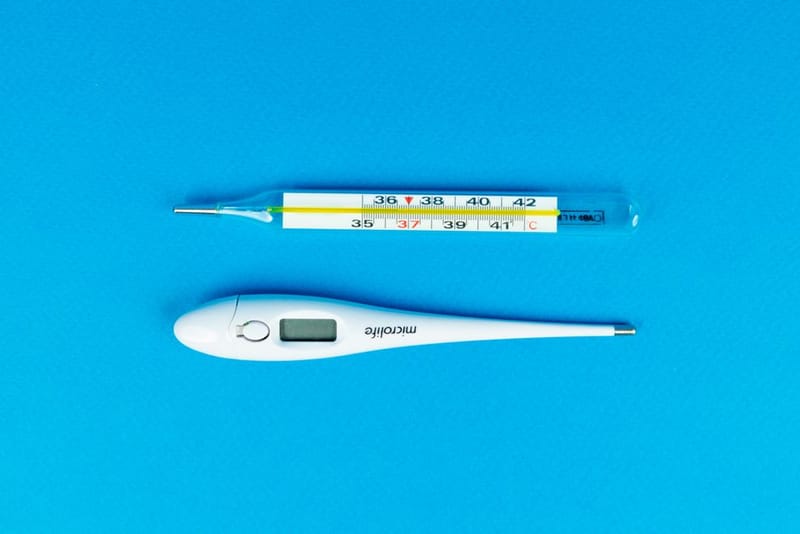
Smart ring temperature tracking is accurate for what it is built to do, which is spotting how tonight compares with your own normal. It is not a thermometer. The sensor reads skin temperature at your finger and learns your personal baseline over time, then flags the small nightly shifts that line up with illness, your menstrual cycle, and disrupted sleep. Judge it on those trends, not on the degrees it shows.
What does a smart ring's temperature sensor measure?
The ring has a temperature sensor against the skin of your finger, and it samples continuously while you sleep. It records skin temperature, which is related to but not the same as your core body temperature. Skin runs cooler and reacts to the room around you, so the raw figure is never a clinical body-temperature reading.
What the ring cares about is the pattern. By sampling every night in similar conditions, it builds a stable picture of your normal and watches for movement away from it.
Why track deviation instead of absolute temperature?
Skin temperature is too noisy to use as an absolute value, but the change from your own baseline is genuinely informative. This is the same principle behind basal body temperature (the body's lowest resting temperature, reached during sleep), which has long been used to track menstrual cycles.
By reporting a deviation such as plus or minus a fraction of a degree from your normal, the ring sidesteps the accuracy problem of absolute readings. A consistent measurement environment, asleep and still, is what makes that deviation trustworthy.
What can skin temperature trends reveal?
The clearest signal is the menstrual cycle. Body temperature rises after ovulation, so a sustained overnight increase helps confirm cycle phase. A sharp rise can also be an early hint of illness, often appearing a day or two before you feel symptoms. Alcohol, a late heavy meal, and a hot bedroom all nudge the reading too.
None of these is a diagnosis. They are context that, combined with sleep and heart-rate data, helps you understand why you feel the way you do on a given morning.
How accurate is it?
For trends, smart ring temperature tracking is reliable, and several rings have been used in cycle-tracking research on this basis. For absolute temperature, it is not accurate and is not meant to be. The deviation model is robust precisely because it cancels out the sensor's absolute error by always comparing you against yourself.
Accuracy depends on consistency. The ring needs several nights to learn your baseline, and it reads best when you sleep in a stable environment. Erratic sleep or wildly varying room temperatures widen the noise and make the trend harder to read.
What throws the reading off?
Room temperature: a hot or cold bedroom shifts skin temperature independently of your body, so a heatwave can look like a deviation.
Bedding and clothing: a thicker duvet or gloves trap heat around the hand and raise the reading.
Inconsistent sleep: the ring measures overnight, so very short or broken sleep gives it less clean data to work with.
Alcohol and late meals: both raise overnight temperature and can mask or mimic other signals.
A loose fit: poor skin contact lets the sensor drift toward ambient temperature rather than your skin.
Can it detect a fever?
Not reliably, and you should not use it that way. Because the ring reports a deviation from your baseline rather than an absolute temperature, and because it reads skin rather than core temperature, it cannot give you the kind of number a thermometer does. It may flag an unusual overnight rise that coincides with feeling unwell, which is useful as an early nudge.
If you need to know whether you have a fever, use a thermometer. The ring's role is to spot that something has shifted, not to tell you by how many degrees.
Frequently asked questions
Does a smart ring measure body temperature?
How many nights before temperature data is useful?
Can a smart ring confirm ovulation?
Why did my temperature reading spike for no reason?
Smart Ring Blood Oxygen (SpO2) Accuracy
Smart Ring Health Metrics Explained
Smart Ring for Cycle Tracking
Choosing a ring for health tracking?
Our buying guide compares sensor accuracy and features across the leading smart rings.