Comparison · 2 picks
Oura Ring 4 vs Ultrahuman Ring Air: 2026 UK Comparison
Affiliate disclosure: we may earn a commission when you buy through links on this page, at no extra cost to you. Our verdicts are our own and are not influenced by compensation. As an Amazon Associate I earn from qualifying purchases.
The Oura Ring 4 and the Ultrahuman Ring Air are the two smart rings most UK buyers are choosing between in 2026. They both ship in a similar titanium-with-PVD-coating shell, they both promise sleep, HRV and recovery tracking, and they both fit into roughly the same daily routine. The headline difference is the subscription. Oura charges £5.99 a month to unlock most of the app's insights. Ultrahuman charges nothing.
That sounds like a tidy way to decide. It isn't. The subscription pays for noticeably more polished software, a genuinely better sleep model, and the broader ecosystem of features Oura keeps shipping. Ultrahuman's free tier is genuinely good, and it includes things (a glucose-aware mode, AI insights) that Oura locks behind the same paywall. Picking between them is mostly about which trade-off you actually want to live with for two or three years.
At a glance
All 2 options side by side.
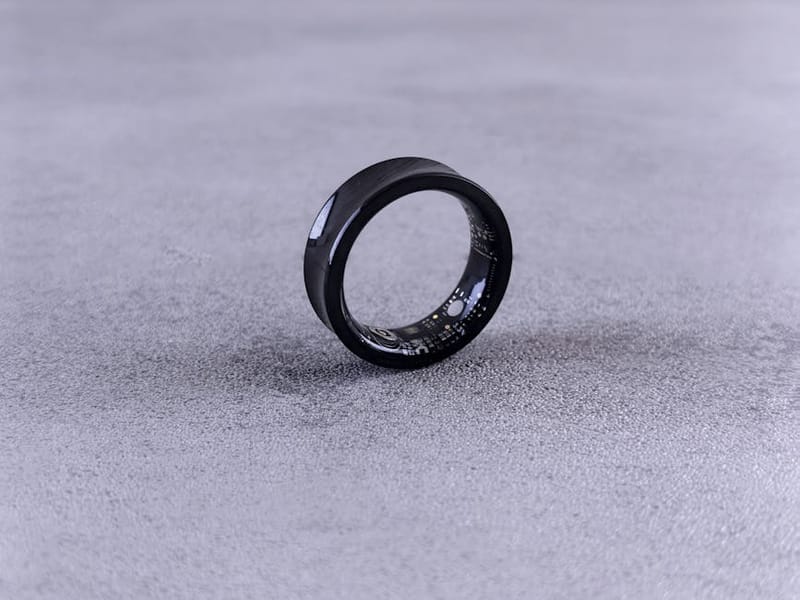 | 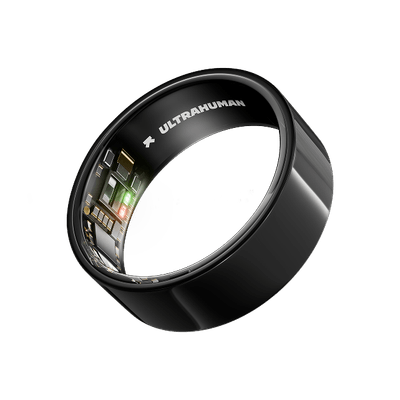 | |
|---|---|---|
| Price | £349 | £329 |
| Best for | The right pick if you want the most accurate sleep and HRV data on the market and you are happy paying the monthly subscription that unlocks it. | The right pick if you want one-time-purchase ownership, can read raw metrics yourself, and value the integrations with glucose monitoring and AI coaching. |
| Review | Read review → | Read review → |
| Buy |
The picks in detail
Oura Ring 4
Bottom line. The right pick if you want the most accurate sleep and HRV data on the market and you are happy paying the monthly subscription that unlocks it.
Pros
- The most refined sleep-stage and HRV algorithms in the category, repeatedly validated against polysomnography in independent testing
- Titanium build with recessed PPG sensors that survive daily wear - most users report two-to-three years before noticeable scuffs
- Four-to-seven day battery in normal use, with a small, fast-charging puck included in the box
- Multiple sizes (US 6–13) and three finishes (Heritage, Stealth, Gold/Rose Gold) for fit and aesthetics
- Genuinely innovative women's-health and metabolic-load metrics that competitors are still catching up on
Cons
- Oura Membership at £5.99/month is required to access the bulk of features - it adds £71.88 to the first-year cost
- No always-on heart rate or live workout heart-rate broadcast - fitness use is supplementary rather than primary
- No continuous SpO2 reading - overnight SpO2 is a spot-check during sleep, not 24/7
- Higher-priced finishes (Stealth, Gold) command a £50–£200 premium for cosmetic differences only
- Closed ecosystem - your historical data lives inside the Oura app and is difficult to export in a portable form
More buying options (1)
- Oura Check price View deal →
Ultrahuman Ring Air
Bottom line. The right pick if you want one-time-purchase ownership, can read raw metrics yourself, and value the integrations with glucose monitoring and AI coaching.
Pros
- No mandatory subscription - every current feature is included with the hardware purchase, unlike Oura, Whoop and several newer rivals
- Lightest mainstream smart ring on the market at 2.4 – 3.6 g, which makes it materially less intrusive in sleep
- 10 ATM water resistance covers swimming and showering without the cautious-wear advisories seen on some rivals
- Five finishes including Raw Titanium and Bionic Gold span the cheapest and most premium aesthetic options in the category
- PowerPlugs marketplace adds opt-in trackers (caffeine, AFib screening, cycle phase) without raising the base subscription
Cons
- Sleep-stage and HRV accuracy track Oura closely in independent comparisons but remain a step behind it for the most rigorous use cases
- Battery life is real-world 4 – 6 days rather than the marketing-page 6+ - most rivals overstate equally, but the gap to Oura's 4 – 7 day claim is small
- The Ultrahuman app's UI is denser and less polished than Oura's, with a steeper learning curve for first-time wearable users
- Premium finishes (Bionic Gold, Space Silver) command a £100 – £200 cosmetic premium identical to Oura's pricing ladder
- Active legal context - Oura has ongoing patent infringement litigation against Ultrahuman in the US and India (status reviewed below); buy with the caveat that the legal outcome could affect future US availability
More buying options (1)
- Amazon Check price View deal →
Why does the subscription matter so much?
The subscription is the cleanest place to start because it changes the maths of ownership.
Buy the Oura Ring 4 for £349 and add the Oura membership at £5.99 a month, and after three years you have spent roughly £565 on the device plus its software. Buy the Ultrahuman Ring Air for £309 and add nothing, and after three years you have spent £309. The all-in difference is around £250.
That's not a small number. It pays for a Garmin watch, or a year of a decent gym membership, or a UK return flight to most of Europe. It is, however, what you are paying for the materially better sleep model, the personalised readiness baseline, and the weekly cadence of app improvements that Oura has shipped since launch. If you do not look at your data, the Ultrahuman is the easier money decision. If you do, the Oura is the better data decision. The split is that clean.
Which is more accurate on sleep and HRV?
Oura. Both rings produce credible sleep data, and both produce a recovery / readiness score that most people will find broadly useful. The independent testing community (the Quantified Scientist's regular smart-ring sleep-tracking comparisons are the reference everyone in the niche cites) has consistently put the Oura at or near the top of the field on sleep-stage accuracy and HRV measurement.
Ultrahuman lands in the second tier - close, defensible, recognisable to a sleep scientist, but not the top of the league. For a normal user the gap is small. For a quantified-self type chasing the best possible sleep model the gap is the reason to pay the subscription.
One real caveat: both rings show their best on someone with a steady sleep schedule. Shift workers and parents of small children should expect noisier data on both.
How do they compare on battery and daily wear?
Oura Ring 4 is the clear winner on battery: 7-8 days per charge in owners' real-world reports, sometimes longer if you sleep light on workouts. The Ultrahuman Ring Air sits at 4-6 days. Neither is so short that you forget to charge it, but the longer Oura runway is the more comfortable feel day-to-day.
On comfort the two are close enough that fit comes down to your hand rather than the brand. Both ship a sizing kit, and the rings are roughly the same thickness and weight. Owners with a desk job and slightly slimmer fingers tend to forget they're wearing either ring within a few days.
How do the apps and ecosystems compare?
The Oura app is the more polished product. The interface has had years of iteration, the explanations are written in plain English, and the integrations span Apple Health, Google Health Connect, Strava, MyFitnessPal, plus a growing collection of partner apps. Weekly app updates have become routine.
The Ultrahuman app is genuinely good, and on a couple of dimensions it does things Oura does not. The CGM integration (if you are wearing one of Ultrahuman's continuous glucose monitors) is the cleanest in the smart-ring market. The AI coaching tier (paid extra) is in early stages but is the kind of feature you'd expect Oura to launch eventually.
For most UK buyers who are not on a CGM, the Oura app gives you more of the daily quality-of-life. For UK buyers who already use an Ultrahuman CGM, the Ring Air is a no-brainer companion.
What about UK availability and warranty?
Both rings ship into the UK from official channels. Oura sells through ouraring.com and through John Lewis, Currys and Amazon UK. Ultrahuman sells through ultrahuman.com and Amazon UK. Sizing kits are dispatched first, so the buying flow is a two-step on either side.
Warranty is two years for both, in line with UK consumer law expectations. Out-of-warranty replacements are easier to source for Oura because the volume is higher; spare-parts and accessory availability is also better for Oura at the moment. That is the kind of difference that only matters if something goes wrong, but it tilts in Oura's favour.
Which is best for women's health tracking?
Both rings track menstrual cycle as a derived signal (skin temperature, HRV patterns). Oura is the more mature implementation here - the cycle insights are clearly explained, the temperature-derived ovulation window is well-documented, and the integration with Natural Cycles (separate paid app) is the most polished route to using ring data for contraception or conception planning. Ultrahuman's implementation is functional but less developed.
This is a place where the gap is real and Oura is the stronger choice for most users who care about cycle tracking. If this is a major reason you are buying a smart ring, the subscription is more easily justified.
Which should you actually buy?
The honest, slightly boring answer is that the buyer profile decides this one cleanly.
- Buy the Oura Ring 4 if (1) you want the most accurate sleep and HRV data the smart-ring category currently produces, (2) you actively engage with the app and would be sad to lose the readiness score and explanations, (3) cycle tracking matters to you, or (4) you simply prefer a finished, polished product even when it costs more.
- Buy the Ultrahuman Ring Air if (1) the £200+ three-year subscription cost on Oura makes you flinch, (2) you wear or plan to wear an Ultrahuman CGM, (3) you mostly want clean raw metrics and don't need the app to interpret them for you, or (4) you've subscribed to too many services already and want something that just works once you've paid.
Both rings are good. Neither is wrong. The smartest move for most buyers we've seen in 2026 is to start with the Ultrahuman Ring Air, give it three months, and only step up to Oura if you find yourself wanting more interpretation than the Ultrahuman app provides.