Comparison · 2 picks
RingConn Gen 3 vs Ultrahuman Ring Pro UK 2026
Affiliate disclosure: we may earn a commission when you buy through links on this page, at no extra cost to you. Our verdicts are our own and are not influenced by compensation. As an Amazon Associate I earn from qualifying purchases.
If you've decided you want a no-subscription smart ring at the GBP 350-400 tier in 2026, your shortlist is realistically these two. RingConn Gen 3 and Ultrahuman Ring Pro compete head-to-head on price and target overlapping users - but they've made different bets on what to optimise for. This guide walks through where each one pulls ahead.
Where RingConn Gen 3 wins
Two genuinely new feature categories - and an easier UK buying path.
Built-in haptic motor is the headline. RingConn Gen 3 is the first smart ring with vibration alerts - elevated heart rate, inactivity reminders, step-goal pings - delivered as a buzz on your finger instead of a phone notification. For users who deliberately leave their phone in another room (sleep hygiene, focus blocks, school pickup), this is the difference between getting useful real-time feedback and getting nothing.
Nighttime blood-pressure trend tracking is the second genuinely new metric class. It's trend-only (RingConn is explicit: not clinical, not a diagnostic measurement, not a substitute for a cuff-based BP reading) but it's useful as a conversation input with a doctor if you're tracking lifestyle interventions or medication impact over weeks. No other consumer smart ring offers this in 2026.
UK availability is the third advantage, with a caveat. The Gen 3 has been purchasable in the UK since early 2026, but mainly through RingConn's own store and Amazon - major UK retail listings still mostly stock the Gen 2. Ordering one today is still straightforward, which is more than can be said for the Ring Pro's pre-order queue.
Where Ultrahuman Ring Pro wins
Battery, build, and on-device intelligence.
15-day battery life (+ 45-day buffer from the included charging case) is the longest in the smart-ring category. RingConn Gen 3 is 10-14 days nominally but drops to 10-12 with the haptic motor active - so the realistic gap owners report day-to-day is 12 vs 15 days. Not a 10x difference but meaningfully fewer charge sessions over a year.
Titanium unibody construction matters more than it sounds. The Ring Pro is solid titanium throughout, not the titanium-coated composite frames common at this tier. More durable for users who do gym work, gloves-on outdoor work, or climb.
On-chip dual-core processor for local ML means the Jade AI insights platform runs more analysis on-device rather than round-tripping to a server. Practical benefits: faster app responsiveness, less battery drain on the phone side, better offline behaviour when travelling.
Optional Blood Vision metabolic panel sits alongside (not gating) the core features - so if you want to add lab-based metabolic tracking later, the platform is there. No equivalent on RingConn.
At a glance
All 2 options side by side.
 | 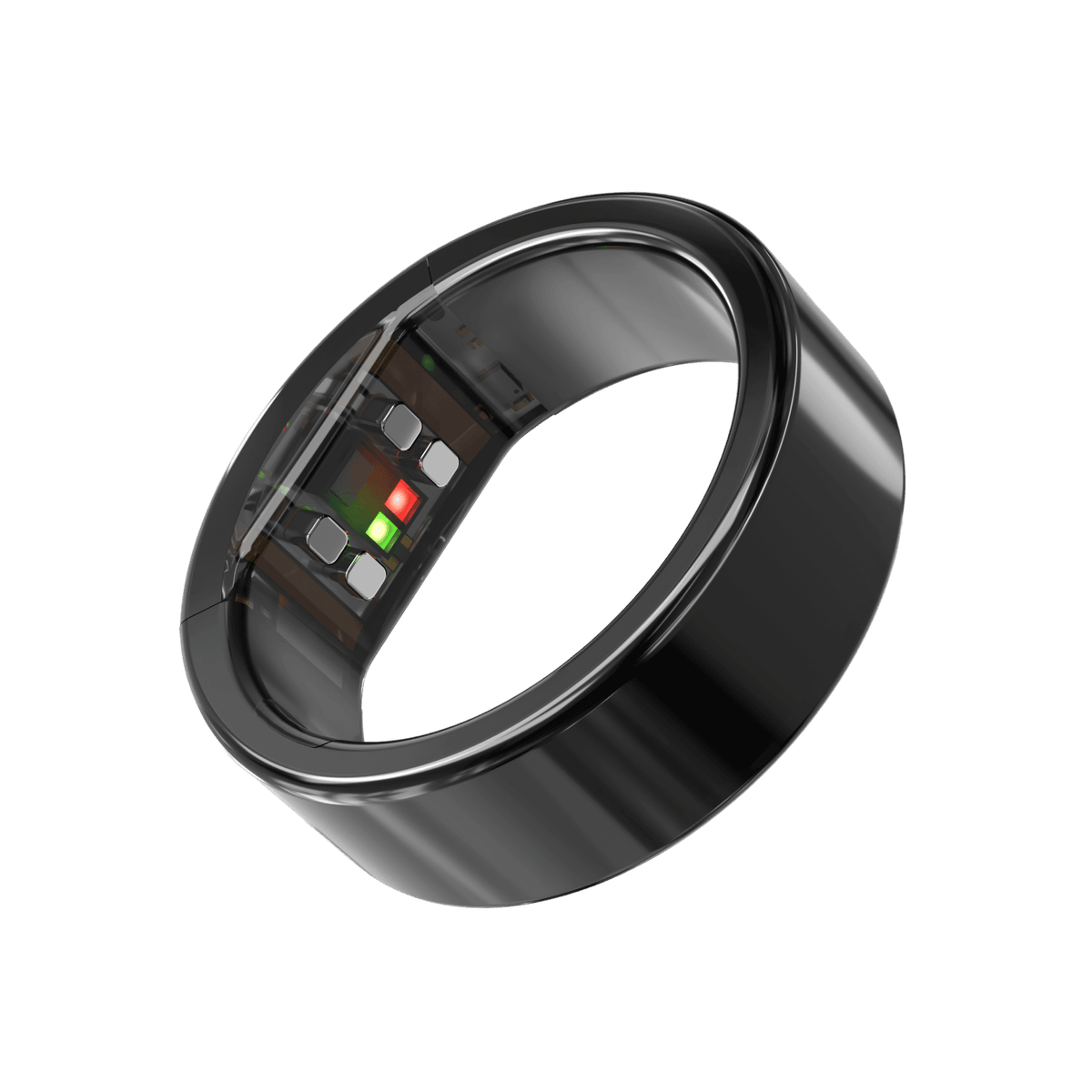 | |
|---|---|---|
| Price | £309 | £429 |
| Hardware price | GBP 349 | GBP 380 (USD 479) |
| Subscription | None - all features included | None - Jade AI included; optional Blood Vision available |
| Battery (nominal) | 10-14 days (10-12 with haptic active) | 15 days + 45-day case buffer |
| Charging case buffer | Not included as standard | Included, adds 45 days |
| Build | Titanium-coated composite | Titanium unibody |
| Haptic motor | Yes (category-first) | No |
| Nighttime BP trend | Yes (trend-only, not clinical) | No |
| UK availability | RingConn direct + Amazon (major UK retail still mostly stocks Gen 2) | Rolling out through 2026 |
| Review | Read review → | Read review → |
| Buy |
The picks in detail
RingConn Gen 3
Pros
- First smart ring with built-in haptic motor (vibration alerts for elevated HR, inactivity, step goals)
- Nighttime blood-pressure trend tracking - new metric class for the category
- 10-14 day battery life across the category's longer-lived end
- No subscription required - all features included with hardware
- Universal wireless charging case (size-agnostic) replaces Gen 2's awkward size-specific charger
- Titanium build with medical-grade epoxy interior
- 10 ATM water resistance (shower + swim compatible)
Cons
- £309 price closes the value gap vs Oura Ring 4 (£349 hardware) - no longer the budget no-sub pick
- Nighttime blood pressure tracking is trend-only, not clinical-grade or medically validated
- Haptic motor reduces battery life from 14 to 10-12 days when active
- Independent polysomnogram + chest-strap HRV validation data not yet published (CES 2026 launch)
- UK retail availability still building in mid-2026
More buying options (1)
- RingConn Check price View deal →
Ultrahuman Ring Pro
Pros
- Category-leading 15-day battery life (more than 2x Oura Ring 4)
- No subscription required for core features or the Jade AI platform
- Titanium unibody construction + on-chip ML processor
- 250 days of on-device health data storage
- Four finish options (Bionic Gold, Space Silver, Aster Black, Raw Titanium)
- ProRelease emergency-cut safety feature
Cons
- £429 - premium price
- Independent polysomnogram accuracy data not broadly published as of mid-2026
- Production-delayed: official page shows pre-order as of July 2026, with limited UK availability
- Jade AI platform is genuinely new and unproven against Oura's longitudinal-data depth
Sensor stack: roughly equivalent for core tracking
Both cover the wellness-data essentials at this tier.
For the things most smart-ring buyers care about - sleep tracking, resting heart rate, HRV, SpO2, skin temperature, step count, basic activity recognition - both rings cover the standard sensor stack to a comparable standard. Both report 80-85% sleep-stage agreement with clinical polysomnography in independent comparisons (broadly the smart-ring category baseline).
The differentiation is in what each ring adds on top:
- RingConn adds the haptic motor + nighttime BP trend as new metric classes.
- Ultrahuman adds on-device ML for the Jade insights platform + Blood Vision metabolic panel availability.
If you're solving for 'best basic sleep + RHR + HRV tracker', either is fine. If you've identified specific feature wants (haptic alerts vs maximum battery life), the table above resolves it.
App maturity + ecosystem
Ultrahuman's Jade platform is more developed; RingConn's app is catching up fast.
The Jade AI insights platform (Ultrahuman) is the more mature of the two app experiences. It's been live for longer, has had more iteration cycles, and the on-device ML makes the in-app analysis snappier. Ultrahuman also has a wider ecosystem story including the Blood Vision metabolic panel (separate subscription, optional), AGS dietary recommendations, and a developer API.
RingConn's app is functional and well-designed - the basics are all there - but the Gen 3 features (haptic alerts, BP trend) are newer to the platform and the surrounding UX is still catching up to where Oura/Ultrahuman have been for a couple of years. Expect the gap to close over 2026.
Sizing + comfort: similar profile, different details
Both ship sizing kits; expect a 1-2 week wait before the ring arrives.
Standard smart-ring sizing flow for both: order a free sizing kit first, wear the sample sizes for 24-48 hours to find your fit (finger size varies throughout the day with hydration + temperature), report back, then the real ring ships. Adds 1-2 weeks to the total purchase timeline for both.
RingConn Gen 3 is slightly thinner profile; Ultrahuman Ring Pro is slightly more rounded on the inner edge. Comfort-wise both are at the 'forget you're wearing it within a week' tier - if comfort is your gating factor, lean toward whichever is easier to return if it doesn't suit you (UK availability favours RingConn here).
Bottom line
Pick based on which feature axis matters more to you.
Pick RingConn Gen 3 if:
- You want the haptic motor + nighttime BP trend tracking that no other ring offers.
- You want a ring you can order in the UK today - via RingConn direct or Amazon - rather than joining a pre-order queue (major UK retail still mostly stocks the Gen 2).
- You're prepared to accept slightly shorter battery life (10-12 days active vs 15) in exchange for the new features.
Pick Ultrahuman Ring Pro if:
- You want the longest battery life in the category (15 days + 45-day case buffer).
- You want titanium unibody construction (more durable for active users).
- You're interested in the Jade AI / Blood Vision ecosystem story (paid add-ons but no subscription on core features).
- You're OK waiting: as of July 2026 the Ring Pro is on pre-order with limited UK availability following production delays.
Both are excellent picks for buyers who specifically want to avoid the Oura subscription model. Whichever you pick, you'll get the no-subscription benefit + a ring that's competitive with the subscription-based options on core sensor accuracy.