Best Smart Ring for Cycle Tracking (UK 2026)
Best smart rings for cycle tracking UK 2026: Oura Ring 4, Ultrahuman Ring Air. Honest about MHRA limits, contraception, and GDPR data storage.
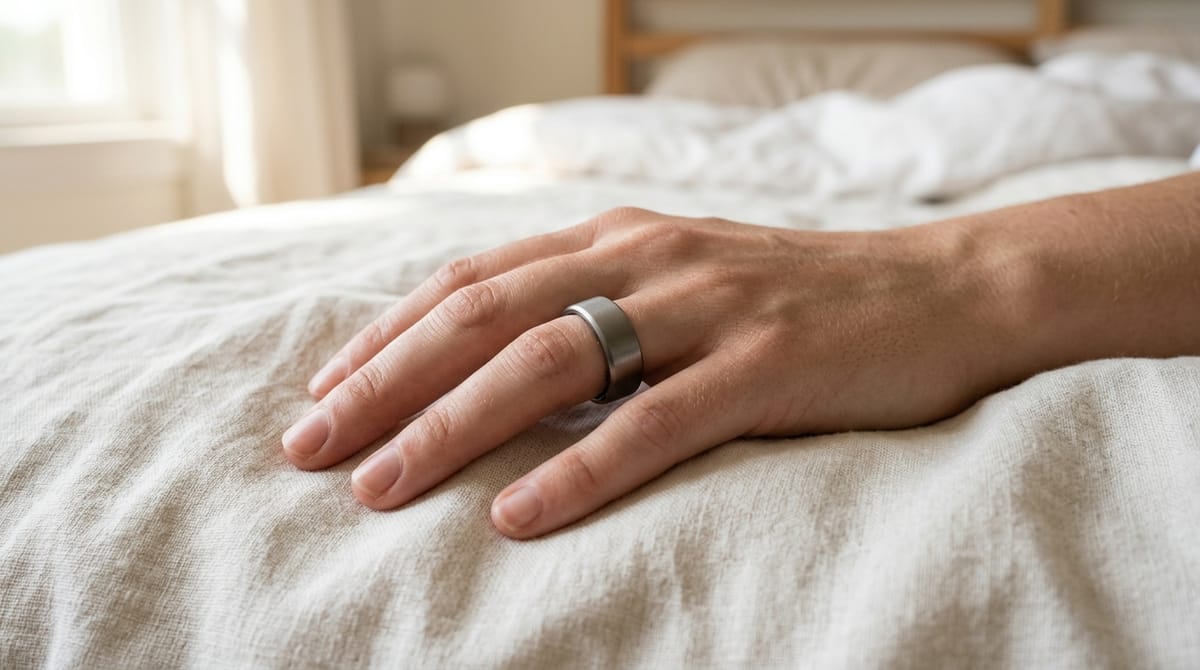
Smart rings have become a common tool for cycle tracking because they monitor overnight skin temperature continuously - a more reliable cycle signal than a single-point morning basal-body-temperature reading. The UK market in 2026 has two credible options: Oura Ring 4 and Ultrahuman Ring Air. This guide covers what they actually do, the MHRA and contraception limits, the GDPR data-storage reality, and which UK users are well-served vs which need to look at clinical alternatives.
What do smart rings actually measure for cycle tracking?
Smart rings track menstrual cycle phase via two primary signals:
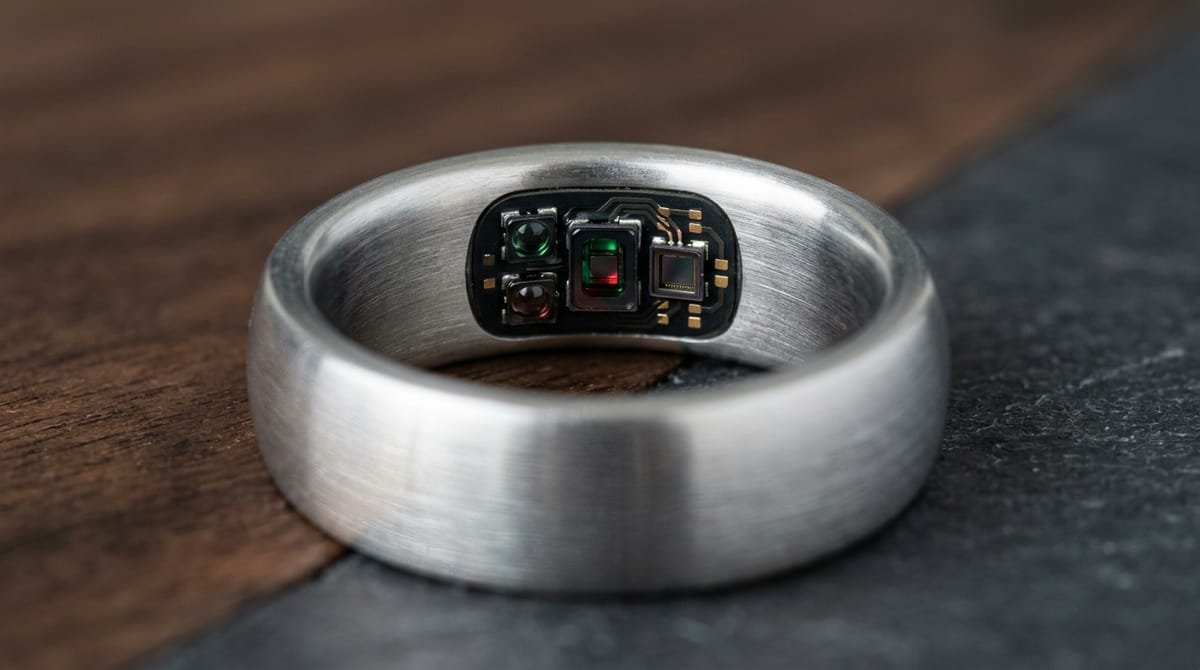
Overnight skin temperature variation. Skin temperature changes across the menstrual cycle - typically rising 0.2-0.5°C in the luteal phase (post-ovulation) compared to the follicular phase. Smart rings sample skin temperature continuously throughout sleep, then compare nightly aggregates against your personal baseline. This is meaningfully more reliable than the traditional basal-body-temperature method (single point on waking with an oral thermometer) because it captures hundreds of readings per night rather than one.
Heart rate variability (HRV) trend. HRV typically decreases in the luteal phase as the body operates at a slightly higher metabolic baseline. The signal is weaker than temperature but the two combined give a more robust cycle-phase estimate than either alone.
Both Oura and Ultrahuman process these signals into an estimated cycle-phase prediction (follicular, fertile window, luteal, menstrual). The accuracy is meaningfully better than single-temperature methods but is NOT FDA-cleared, NOT MHRA-cleared, and should NOT be used for contraception or for medical decisions.
How do the UK cycle-tracking options compare?
| Oura Ring 4 | Ultrahuman Ring Air | Apple Watch Series 9/10 (alternative) | |
|---|---|---|---|
| Tier | Most mature cycle features | Simpler, no-subscription alternative | Watch-based alternative |
| Hardware price (UK) | £349 | £329 | £399+ |
| Subscription | £5.99/month required for full insights | None (key differentiator from Oura) | None (full features on hardware) |
| Temperature sensor | Yes (medical-grade NTC thermistor) | Yes | Yes (Series 8+) |
| HRV cycle integration | Yes | Yes | Yes via Apple Health |
| Cycle prediction | Phase-by-phase prediction with confidence intervals | Phase prediction (less mature than Oura) | Retrospective ovulation estimate |
| Period-prediction accuracy | Comparable to dedicated cycle apps (per published Oura research) | Slightly less refined than Oura per third-party comparisons | Comparable to smart-ring tier |
| MHRA / FDA cleared | No (general wellness device only) | No | Apple's cycle-tracking feature has FDA clearance (US) - MHRA equivalent in UK |
| GDPR / data storage | US servers (Oura is US-headquartered) | US/Singapore servers | Apple iCloud (Privacy Day Data Architecture) |
| Best for | Users wanting the most mature cycle features | No-subscription users; budget-conscious cycle tracking | iPhone users already in the Apple ecosystem |
What's the MHRA and contraception reality for ring-based cycle data?
This section is the most important in this guide. Smart-ring marketing increasingly implies cycle tracking as a contraception adjunct - this is misleading and potentially harmful.
Smart rings are not contraceptives. The Oura Ring 4 and Ultrahuman Ring Air are NOT MHRA-cleared, NOT FDA-cleared as contraception, and NOT validated in the published cycle-contraception research base (the FAM and symptothermal method studies use specific protocols and trained users, not consumer smart-ring data).
The only MHRA-cleared digital contraceptive in the UK is Natural Cycles. This is an app, not a smart ring - it uses a single-point morning basal-body-temperature reading with a clinically-validated algorithm. CE-marked and MHRA-recognised. Even Natural Cycles has documented failure rates (around 6.9% with typical use, 1.8% with perfect use) which is comparable to condoms but worse than the pill or IUD.
Smart-ring cycle data CAN inform fertility awareness as one signal among several, but it should never be the sole signal for contraception decisions. If you're using fertility awareness for contraception, you need: a tested method (symptothermal, sympto-hormonal, or Natural Cycles), proper training, and acceptance of the failure-rate reality.
For trying to conceive, smart-ring cycle data is useful as a personal-insight tool. Combine with LH ovulation tests (the £15 strips you can buy at any UK pharmacy) for more reliable ovulation timing.
How does GDPR apply to your cycle data?
Smart-ring cycle data is sensitive personal information under UK GDPR + the broader EU GDPR framework. Both Oura and Ultrahuman process and store this data on servers outside the UK (Oura is US-headquartered; Ultrahuman is Indian/Singapore-headquartered with various server locations). For UK users, this means:
- Cycle data crosses borders for processing - the data-residency reality is US/EEA-equivalent, not UK-only.
- Both companies publish GDPR-aligned privacy policies but the practical implementation requires you to trust the company's data-handling.
- Data deletion requests work via the apps - but the data has typically been processed on cloud servers before you delete.
- In the US, abortion-restricted state context has made smart-ring cycle data a subject of legal-discovery concerns. The UK position is different but the underlying data-portability question still applies.
If data sovereignty matters to you (e.g. you're concerned about future legal exposure or you have specific privacy requirements), neither Oura nor Ultrahuman fully meet UK-data-stays-in-UK criteria. The Apple Health alternative is closer to UK-data-stays-with-you but the data still passes through Apple's global infrastructure.
Who is the cycle-tracking smart ring really for?
Users wanting personal cycle awareness. If you want to know roughly where you are in your cycle, predict your next period, understand the energy/mood/sleep patterns across phases - smart-ring cycle tracking is genuinely useful. The continuous-temperature signal beats single-point BBT methods for personal-insight purposes.
Users tracking specific symptoms cycle-by-cycle. If you want to correlate sleep quality, HRV recovery, or mood with cycle phase, the integrated multi-signal view in Oura/Ultrahuman apps is more useful than separate cycle apps + separate sleep apps.
Users TRYING to conceive (as one signal of several). Smart-ring cycle data is useful for spotting the fertile window in combination with LH urine ovulation tests. Don't rely on it alone.
NOT for users using cycle tracking for contraception. Use a MHRA-cleared contraception method or app (Natural Cycles is the UK option). Smart-ring cycle data is not appropriate for this use case.
NOT for users with irregular cycles or PCOS as a diagnosis tool. Smart-ring cycle prediction depends on relatively-regular cycle patterns. If you have PCOS, very irregular cycles, or have been advised to track specific clinical signals by a doctor, you need clinical-grade tools and oversight - not consumer wellness rings.
Frequently asked questions
Can I use a smart ring as contraception?
Which smart ring has the best cycle tracking?
How accurate are smart-ring period predictions?
What about my data privacy under UK GDPR?
Should I get a smart ring or use a free cycle-tracking app?
Smart Ring Without a Subscription
Best Smart Ring UK 2026
Best Smart Ring for HRV Accuracy