Comparison · 2 picks
Oura Ring 4 vs Ultrahuman Ring Pro: 2026 UK Comparison
Affiliate disclosure: we may earn a commission when you buy through links on this page, at no extra cost to you. Our verdicts are our own and are not influenced by compensation. As an Amazon Associate I earn from qualifying purchases.
If the Oura Ring 4 vs Ultrahuman Ring Air comparison is the 'do I want a subscription or not' debate, then Oura Ring 4 vs Ultrahuman Ring Pro is the 'I have already accepted I am paying for the most accurate ring in the world, now which one' debate. Both are flagship products. Both ask serious money. Neither is wrong; they have moved smart-ring tracking far enough forward that the choice is now mostly about which app you want to live in for the next two or three years.
The headline difference between them is no longer subscription cost (the Ring Pro has optional paid PowerPlug add-ons now), it is philosophy. Oura has spent eight years polishing the same core idea: a beautiful, opinionated ring that interprets your data for you. Ultrahuman with the Ring Pro is openly chasing the 'quantified self' user who wants the newest hardware and the Jade AI assistant reading the signals for them. That difference shows up in every comparison axis below.
At a glance
All 2 options side by side.
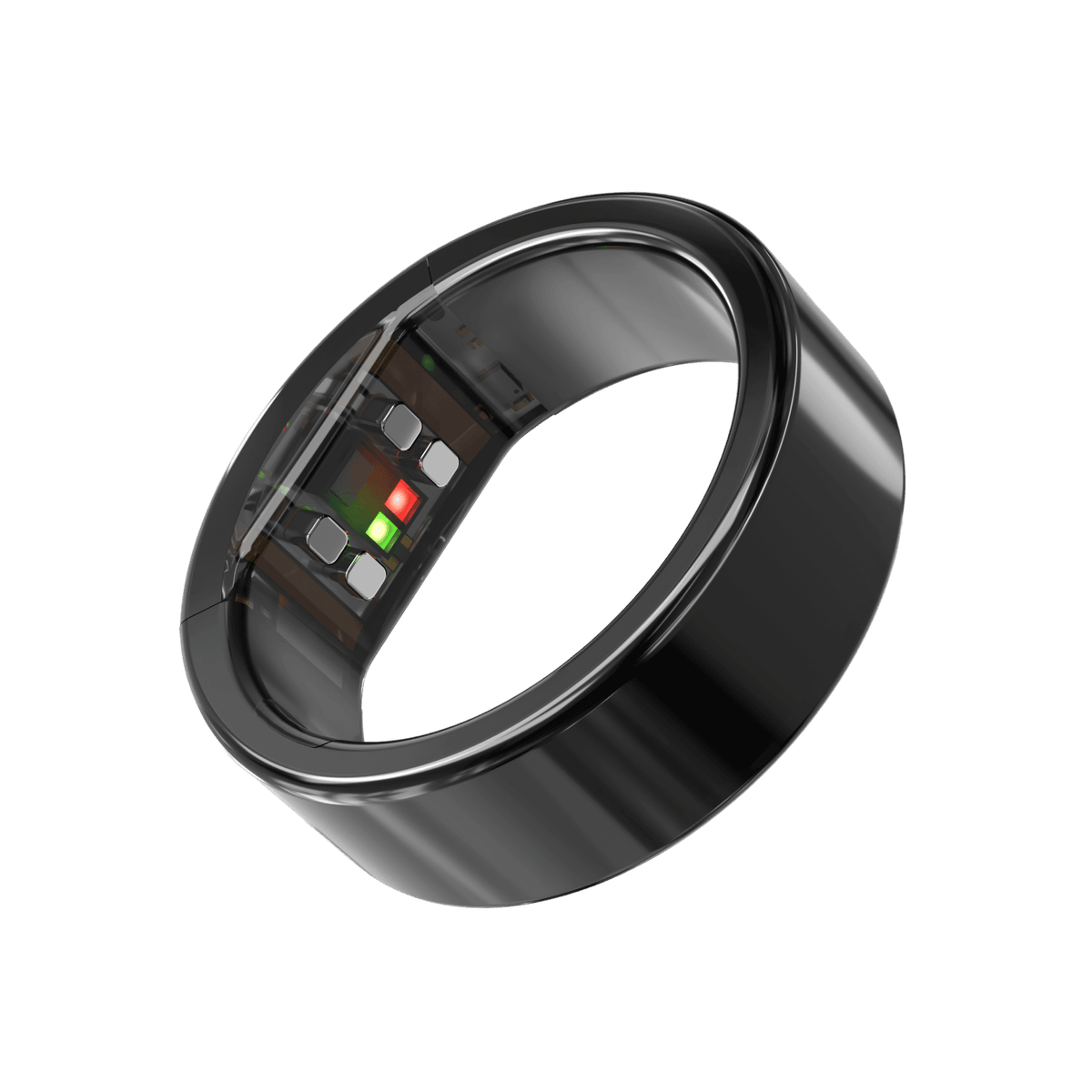 | 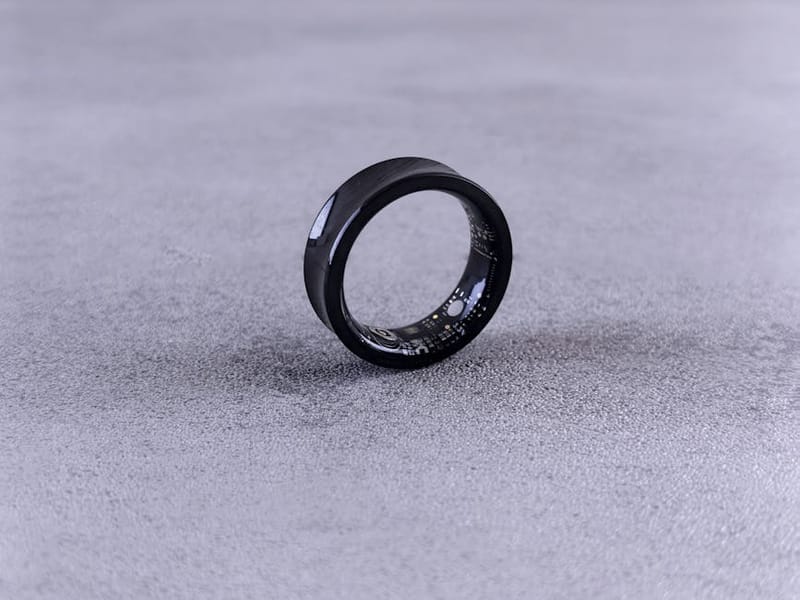 | |
|---|---|---|
| Price | £429 | £349 |
| Best for | The right pick if you want the newest hardware (a claimed 12-15 day battery, dual-core chip, included charging case), the optional CGM integration, and the Jade AI assistant - and you want to engage with raw signals yourself. | The right pick if you want the most polished app and the most mature ecosystem, and you are happy to let Oura's research team interpret your data for you. |
| Review | Read review → | Read review → |
| Buy |
The picks in detail
Ultrahuman Ring Pro
Bottom line. The right pick if you want the newest hardware (a claimed 12-15 day battery, dual-core chip, included charging case), the optional CGM integration, and the Jade AI assistant - and you want to engage with raw signals yourself. Currently on pre-order with limited UK availability.
Pros
- Category-leading 15-day battery life (more than 2x Oura Ring 4)
- No subscription required for core features or the Jade AI platform
- Titanium unibody construction + on-chip ML processor
- 250 days of on-device health data storage
- Four finish options (Bionic Gold, Space Silver, Aster Black, Raw Titanium)
- ProRelease emergency-cut safety feature
Cons
- £429 - premium price
- Independent polysomnogram accuracy data not broadly published as of mid-2026
- Production-delayed: official page shows pre-order as of July 2026, with limited UK availability
- Jade AI platform is genuinely new and unproven against Oura's longitudinal-data depth
Oura Ring 4
Bottom line. The right pick if you want the most polished app and the most mature ecosystem, and you are happy to let Oura's research team interpret your data for you.
Pros
- The most refined sleep-stage and HRV algorithms in the category, repeatedly validated against polysomnography in independent testing
- Titanium build with recessed PPG sensors that survive daily wear - most users report two-to-three years before noticeable scuffs
- Four-to-seven day battery in normal use, with a small, fast-charging puck included in the box
- Multiple sizes (US 6–13) and three finishes (Heritage, Stealth, Gold/Rose Gold) for fit and aesthetics
- Genuinely innovative women's-health and metabolic-load metrics that competitors are still catching up on
Cons
- Oura Membership at £5.99/month is required to access the bulk of features - it adds £71.88 to the first-year cost
- No always-on heart rate or live workout heart-rate broadcast - fitness use is supplementary rather than primary
- No continuous SpO2 reading - overnight SpO2 is a spot-check during sleep, not 24/7
- Higher-priced finishes (Stealth, Gold) command a £50–£200 premium for cosmetic differences only
- Closed ecosystem - your historical data lives inside the Oura app and is difficult to export in a portable form
More buying options (1)
- Oura Check price View deal →
How do they actually differ on hardware?
Both rings ship in the now-standard premium-ring shell: titanium, light enough to forget, available in multiple finishes. Side by side they look like rings from the same family. The differences are under the surface.
The Ring Pro is machined as an all-titanium unibody and carries the newer electronics: a dual-core chip with on-device machine learning, up to 250 days of on-ring data storage, a redesigned PPG array that Ultrahuman says improves signal quality, and a claimed 12-15 day battery with an included charging case that stores up to 45 further days of charge. The Oura Ring 4 has the more established PPG / infrared / temperature / accelerometer stack, better positioned than older Oura generations.
In practice the hardware delta matters more for battery life and offline resilience than for the underlying accuracy of sleep tracking, where both are in the same broad tier.
Which is more accurate on sleep and HRV?
Oura, marginally. The independent testing community (the Quantified Scientist's smart-ring comparisons are the reference everyone uses) consistently places the Oura Ring 4 at the top of the sleep-stage accuracy ranking. The Ring Pro is too new for the same depth of independent verification - full polysomnography comparisons had not been broadly published as of mid-2026 - so treat its accuracy as promising but less proven.
For HRV the gap is smaller. Both produce a credible HRV trend; both are within the margin of error you would expect on a research-grade chest-strap setup over a week of nightly readings. Day to day, you should not really see a difference. Across a longer trend window, Oura's personalised baselines kick in faster and the readings have noticeably less week-to-week drift.
The summary: Oura is the right pick if 'best possible sleep model' is your reason for buying a ring. The Ring Pro is the right pick if 'broadest sensor stack' is.
Are the metabolism / CGM features genuinely useful?
The Ring Pro's headline differentiator is the metabolism-adjacent data and the optional integration with Ultrahuman's continuous glucose monitor. If you are seriously interested in your own metabolic data - the kind of person who already wears a CGM, or who is considering one - the integrated experience is by some distance the best in the smart-ring market. The Oura app does not offer anything equivalent in the UK today.
For most users this matters less than the marketing implies. If you are not on a CGM and have no plan to be on one, you are paying for a sensor stack and a marketing layer you may never engage with. The Ring Pro's hardware upgrades - battery, storage, build - apply to everyone, but the metabolism-adjacent insights on their own are not so transformative that they justify the £100 price step up from the Ring Air.
The honest framing: the Ring Pro is for users who are already deep in the quantified-self ecosystem, or who plan to be. The Oura Ring 4 is for everyone else who wants a great ring.
Which app is better day to day?
Oura wins on polish and opinionated guidance. The interface explains things in plain English. The morning readiness summary is one screen, the relevant context is one tap away, the long-form articles linking science to behaviour are written by an actual research team. If you are the kind of user who wants the app to give you a verdict and a recommendation, Oura is much closer to that experience.
Ultrahuman is the better app if you want to see your raw signals. The Ring Pro's dashboards lean more into 'here is what we measured, here is the trend' rather than 'here is what to do about it'. The Jade AI assistant - included at no extra cost - wraps the raw data in a chat-style guidance layer that is improving fast, but as of mid-2026 it still feels less proven than Oura's editorial voice.
If you already use a CGM with the Ultrahuman app, the Ring Pro's integration is the cleanest in the market and the app advantage flips. For everyone else, Oura's app remains the more enjoyable place to spend ten minutes in the morning.
How does cost actually compare over three years?
This used to be where Oura clearly lost, and on like-for-like configurations it mostly still does - but the shape has changed now that Ultrahuman sells paid PowerPlug add-ons alongside the free core.
Oura Ring 4 at £349 list plus the £5.99 monthly subscription comes to roughly £565 over three years.
Ultrahuman Ring Pro at £429 with no add-ons comes to about £429 over three years - the core features and the Jade AI assistant are included in the hardware price. Add a paid PowerPlug such as AFib detection at around £4.90 a month and you land at roughly £605 over three years. With Ultrahuman's optional CGM hardware and sensors on top of that, the maths gets considerably bigger - but that is a different decision.
So the totals now hinge on add-ons: a Ring Pro on the free tier undercuts Oura by well over £100 across three years, while a Ring Pro running a monthly PowerPlug throughout ends up slightly dearer. Price still matters, but which configuration you would actually run matters more.
Two July 2026 caveats: remaining Oura Ring 4 stock is now widely discounted below the £349 list price following the Ring 5 launch, which tilts the totals back in Oura's favour; and the Ring Pro is currently on pre-order with limited UK availability following production delays.
Which has the better battery and daily wear experience?
Ultrahuman, decisively - a reversal of the usual flagship pattern. The Ring Pro's claimed 12-15 days per charge (plus the included charging case holding up to 45 further days) comfortably clears the Oura Ring 4's 7-8 real-world days. If charging friction is a deciding factor, the Pro wins this axis outright.
Day-to-day wear is otherwise close. Both rings are comfortable for full-time wear. Both are rated for normal wet conditions - showering, washing up, gym, light swimming - and neither is recommended for sauna or deep water.
What about UK availability, warranty, and long-term support?
Both ship into the UK through official channels, although as of July 2026 the Ring Pro is on pre-order with limited UK availability following production delays - Oura is the one you can buy off the shelf today. Oura sells via ouraring.com plus John Lewis, Currys, and Amazon UK. Ultrahuman sells via ultrahuman.com plus Amazon UK. Both ship sizing kits first, so the buying flow is two-step.
Warranty is two years on both. Replacement parts and post-warranty service is easier for Oura today simply because Oura has been shipping at higher volume for longer. The Ring Pro's hardware is newer and there is less collective experience with what fails first.
Long-term software support is the genuine wildcard. Oura's track record on supporting older generations through years of app updates is good. Ultrahuman has been around long enough to demonstrate they will keep updating their app, but the Ring Pro is new enough that we cannot yet know how cleanly the Pro-specific features will hold up if the hardware revs again next year.
Which should you actually buy?
Three honest cases.
- Buy the Oura Ring 4 if (1) you want the most accurate sleep / HRV tracking the smart-ring category currently produces, (2) you want a polished, opinionated app that interprets data for you, (3) you do not have or plan to have a CGM, or (4) you are simply not interested in tinkering and want a finished product.
- Buy the Ultrahuman Ring Pro if (1) you already wear or plan to wear an Ultrahuman CGM, (2) the newest hardware (battery, storage, build) and the metabolism-adjacent metrics are specifically appealing to you, (3) you actively prefer raw signal access over a curated interpretation, or (4) the Jade AI assistant and PowerPlugs ecosystem sound like something you would genuinely use.
- Step down to the Ultrahuman Ring Air instead of the Ring Pro if your real motivation is 'no subscription' rather than 'more sensors'. The Ring Air at £329 with no subscription is the cleanest answer for that buyer, and we cover that comparison in Oura Ring 4 vs Ultrahuman Ring Air.
If you cannot decide between Oura and Ring Pro and you do not have a CGM bias either way, the smart move is the Oura Ring 4. It is the safer choice across the largest number of buyer profiles. The Ring Pro is the right call for a narrower but real audience.