Comparison · 2 picks
Ultrahuman Ring Air vs RingConn Gen 3: UK 2026 Comparison
Affiliate disclosure: we may earn a commission when you buy through links on this page, at no extra cost to you. Our verdicts are our own and are not influenced by compensation. As an Amazon Associate I earn from qualifying purchases.
This is the head-to-head most no-subscription buyers actually face in 2026: Ultrahuman's established Ring Air against RingConn's feature-packed Gen 3. Both cost a one-off sum with no monthly fee, both cover the recovery-tracking fundamentals well, and they take visibly different bets on what a ring should do next. Here is how they compare on the things that decide a purchase - sensors, battery, app quality, comfort and price.
At a glance
All 2 options side by side.
 |  | |
|---|---|---|
| Price | £309 | £329 |
| Best for | The pick for battery life and features nothing else has - vibration alerts and BP trends - if you accept the trend-only caveat. | The pick for sleep-first buyers, lighter wear and ecosystem headroom - especially at its frequent sub-£300 street price. |
| Review | Read review → | Read review → |
| Buy |
The picks in detail
RingConn Gen 3
Bottom line. The pick for battery life and features nothing else has - vibration alerts and BP trends - if you accept the trend-only caveat.
Pros
- First smart ring with built-in haptic motor (vibration alerts for elevated HR, inactivity, step goals)
- Nighttime blood-pressure trend tracking - new metric class for the category
- 10-14 day battery life across the category's longer-lived end
- No subscription required - all features included with hardware
- Universal wireless charging case (size-agnostic) replaces Gen 2's awkward size-specific charger
- Titanium build with medical-grade epoxy interior
- 10 ATM water resistance (shower + swim compatible)
Cons
- £309 price closes the value gap vs Oura Ring 4 (£349 hardware) - no longer the budget no-sub pick
- Nighttime blood pressure tracking is trend-only, not clinical-grade or medically validated
- Haptic motor reduces battery life from 14 to 10-12 days when active
- Independent polysomnogram + chest-strap HRV validation data not yet published (CES 2026 launch)
- UK retail availability still building in mid-2026
More buying options (1)
- RingConn Check price View deal →
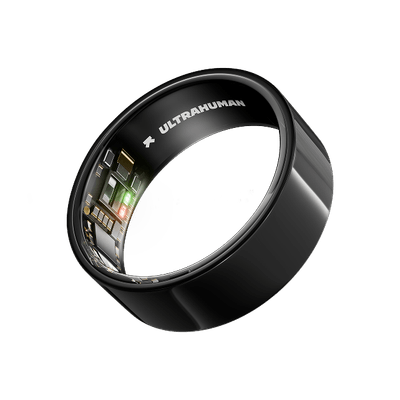
Ultrahuman Ring Air
Bottom line. The pick for sleep-first buyers, lighter wear and ecosystem headroom - especially at its frequent sub-£300 street price.
Pros
- No mandatory subscription - every current feature is included with the hardware purchase, unlike Oura, Whoop and several newer rivals
- Lightest mainstream smart ring on the market at 2.4 – 3.6 g, which makes it materially less intrusive in sleep
- 10 ATM water resistance covers swimming and showering without the cautious-wear advisories seen on some rivals
- Five finishes including Raw Titanium and Bionic Gold span the cheapest and most premium aesthetic options in the category
- PowerPlugs marketplace adds opt-in trackers (caffeine, AFib screening, cycle phase) without raising the base subscription
Cons
- Sleep-stage and HRV accuracy track Oura closely in independent comparisons but remain a step behind it for the most rigorous use cases
- Battery life is real-world 4 – 6 days rather than the marketing-page 6+ - most rivals overstate equally, but the gap to Oura's 4 – 7 day claim is small
- The Ultrahuman app's UI is denser and less polished than Oura's, with a steeper learning curve for first-time wearable users
- Premium finishes (Bionic Gold, Space Silver) command a £100 – £200 cosmetic premium identical to Oura's pricing ladder
- Active legal context - Oura has ongoing patent infringement litigation against Ultrahuman in the US and India (status reviewed below); buy with the caveat that the legal outcome could affect future US availability
More buying options (1)
- Amazon Check price View deal →
Both rings are honest value in a market drifting toward subscriptions, and neither is a wrong answer. The RingConn Gen 3 wins the spec sheet: double-digit battery life, the category's first haptic motor (quiet vibration nudges for inactivity, heart-rate zones and step goals), and nighttime blood-pressure trending nothing else currently offers - with the honest caveats that the BP data is trend-only rather than clinical, and the haptics trim two days off the battery. The Ultrahuman Ring Air wins on wear and software maturity: a couple of grams lighter at the small end, a sleep model we rate as slightly more polished, and an ecosystem that can grow with you - most notably its glucose-monitoring integration if metabolic health is your focus.
Decision rule: if battery anxiety or the vibration alerts appeal, buy the Gen 3 at £349. If you want the most refined sleep-and-recovery experience per gram, or think you might add CGM later, the Ring Air is the pick - and with street prices regularly dipping well under £300 since the Ring Pro arrived above it, it is frequently the cheaper option too. Check current prices on both before deciding; the gap moves month to month.