Comparison · 2 picks
Ultrahuman Ring Air vs RingConn Gen 2: 2026 UK Comparison
Affiliate disclosure: we may earn a commission when you buy through links on this page, at no extra cost to you. Our verdicts are our own and are not influenced by compensation. As an Amazon Associate I earn from qualifying purchases.
The Ultrahuman Ring Air at £309 and the RingConn Gen 2 at £199 are the two strongest no-subscription smart rings on the UK market in 2026. Both deliver real sleep tracking, real HRV, and real recovery scoring without asking you to pay a monthly fee. The £110 price gap between them is mostly explained by the strength of the Ultrahuman ecosystem - especially the CGM integration - rather than by raw data accuracy.
This is a more interesting head-to-head than it looks at first. The two rings appeal to different no-subscription buyers: the Ring Air is for people who already trust the Ultrahuman ecosystem and might layer on a CGM later; the RingConn Gen 2 is for people who just want a competent recovery ring at the cheapest credible price.
At a glance
All 2 options side by side.
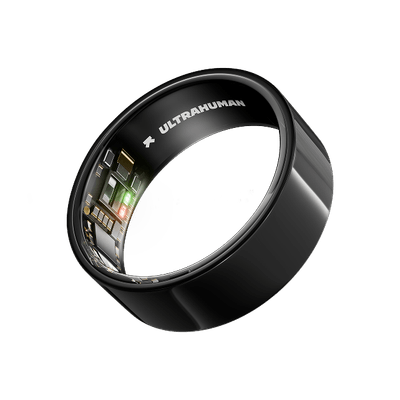 |  | |
|---|---|---|
| Price | £329 | £259 |
| Best for | The right pick if you value the Ultrahuman ecosystem, may add a CGM later, or want a slightly more polished sleep model. | The right pick if you want the cheapest competent recovery ring without compromising on the basics, and you do not need a wider ecosystem. |
| Review | Read review → | Read review → |
| Buy |
The picks in detail
Ultrahuman Ring Air
Bottom line. The right pick if you value the Ultrahuman ecosystem, may add a CGM later, or want a slightly more polished sleep model.
Pros
- No mandatory subscription - every current feature is included with the hardware purchase, unlike Oura, Whoop and several newer rivals
- Lightest mainstream smart ring on the market at 2.4 – 3.6 g, which makes it materially less intrusive in sleep
- 10 ATM water resistance covers swimming and showering without the cautious-wear advisories seen on some rivals
- Five finishes including Raw Titanium and Bionic Gold span the cheapest and most premium aesthetic options in the category
- PowerPlugs marketplace adds opt-in trackers (caffeine, AFib screening, cycle phase) without raising the base subscription
Cons
- Sleep-stage and HRV accuracy track Oura closely in independent comparisons but remain a step behind it for the most rigorous use cases
- Battery life is real-world 4 – 6 days rather than the marketing-page 6+ - most rivals overstate equally, but the gap to Oura's 4 – 7 day claim is small
- The Ultrahuman app's UI is denser and less polished than Oura's, with a steeper learning curve for first-time wearable users
- Premium finishes (Bionic Gold, Space Silver) command a £100 – £200 cosmetic premium identical to Oura's pricing ladder
- Active legal context - Oura has ongoing patent infringement litigation against Ultrahuman in the US and India (status reviewed below); buy with the caveat that the legal outcome could affect future US availability
More buying options (1)
- Amazon Check price View deal →
RingConn Gen 2
Bottom line. The right pick if you want the cheapest competent recovery ring without compromising on the basics, and you do not need a wider ecosystem.
Pros
- No subscription - every feature is included with the hardware purchase, the same value proposition as Ultrahuman at a lower price
- 10 – 12 day real-world battery life is roughly double the rest of the category and a meaningful difference for daily wearers
- Portable charging case ships in the box and provides multiple top-ups without finding the puck - travel-friendly
- Genuinely competitive entry price at £259 - undercuts the Oura Ring 4 (£349) and Ultrahuman Ring Air (£299) on hardware alone
- Three understated finishes work as either a smart ring or a passable everyday ring; the form factor is one of the slimmer profiles in the category
Cons
- Sleep-stage and HRV algorithms are visibly less refined than Oura's and slightly behind Ultrahuman's in independent comparisons
- 5 ATM water resistance is fine for showering and shallow swimming but trails Ultrahuman and Oura's 10 ATM rating for water sports use
- App is functional rather than polished - fewer narrative insights, more raw-number dashboard than the Oura or Ultrahuman experiences
- Smaller brand with less long-term financial visibility than Oura - buyers should account for the residual support risk over a multi-year ownership horizon
- Limited third-party integrations and a closed ecosystem similar to rivals - historical data effectively lives in the RingConn app
More buying options (1)
- RingConn Check price View deal →
Which is more accurate on sleep and HRV?
The Ring Air has a small but consistent edge in independent testing. The Quantified Scientist's mid-2026 smart-ring comparison placed the Ring Air slightly ahead of the RingConn Gen 2 on sleep-stage accuracy, particularly on REM detection. The HRV story is closer to a tie - both produce trends a sleep scientist would accept as credible, both within the margin of error you would expect over a week.
For a normal user the gap is small. For someone making training decisions on the back of the readings, the Ring Air's edge starts to matter.
How do the apps and ecosystems compare?
Ultrahuman, comfortably. The Ultrahuman app's interface is more polished, the explanations are stronger, and the CGM integration is genuinely transformative for users in the quantified-self segment. There is also an optional paid AI Coach tier (~£3.99 a month) for users who want chat-style guidance on top of the raw data.
RingConn's app is capable - the basics are all there, the trends graph cleanly, the daily summary loads fast. What it does not have is the storytelling layer or the wider ecosystem. If you treat the ring as a daily app you open and read, the Ultrahuman experience is more rewarding.
Where does the £110 price gap come from?
Mostly from the ecosystem rather than the hardware. Both rings have similar PPG / infrared / temperature sensor stacks. Both are titanium with PVD coatings. Both produce honest no-subscription data.
The £110 difference goes to Ultrahuman's app polish, the CGM integration option, the AI Coach tier availability, and the broader partner network. If you would use those features, the £110 is reasonable value. If you would not, the £110 is paying for software you will never engage with.
Which has the better battery and build?
RingConn wins on battery: ~10 days per charge against the Ring Air's 4 to 6 days, plus the RingConn ships a charging case that doubles as a portable battery. The Ring Air uses a standard puck charger.
Both rings are titanium-PVD, both are comfortable for full-time wear, both are rated for normal wet conditions (showering, washing up, swimming) but not for sauna or deep diving. The Ring Air's finish is a touch more refined under close inspection. The RingConn's is solid for the price.
What about UK availability and warranty?
Both ship into the UK through official channels. Ultrahuman sells via ultrahuman.com and Amazon UK. RingConn sells via ringconn.com and Amazon UK. Sizing kits ship first on both, so the buying flow is the two-step you get used to in this category.
Both offer two-year warranties. Ultrahuman has slightly more established UK after-sales support given their higher volume in the UK; RingConn has improved meaningfully since the Gen 1 days but remains a smaller operation. Both are credible long-term brands at this point.
Which should you actually buy?
Honest split.
- Buy the RingConn Gen 2 if (1) you want the cheapest credible no-subscription ring, (2) you do not need or want a wider ecosystem, (3) the long battery life and charging case are valuable to you, or (4) you primarily want to track sleep and recovery and do not engage with the app daily.
- Buy the Ultrahuman Ring Air if (1) you are already in or planning to enter the Ultrahuman ecosystem, especially the CGM, (2) you actively use the app and value the more polished sleep model, (3) the AI Coach tier sounds appealing, or (4) you specifically want the slightly better sleep accuracy.
Step up to the Oura Ring 4 vs Ultrahuman Ring Air debate if you are considering paying for a subscription. Step up to RingConn Gen 3 vs Oura if you want the closest non-subscription rival to Oura's accuracy.