Smart Ring + Cortisol: Stress Management Guide (UK 2026)
Smart rings and cortisol - what they actually track for UK stress management. HRV proxy, sleep impact, recovery data. Oura, Ultrahuman, RingConn compared.
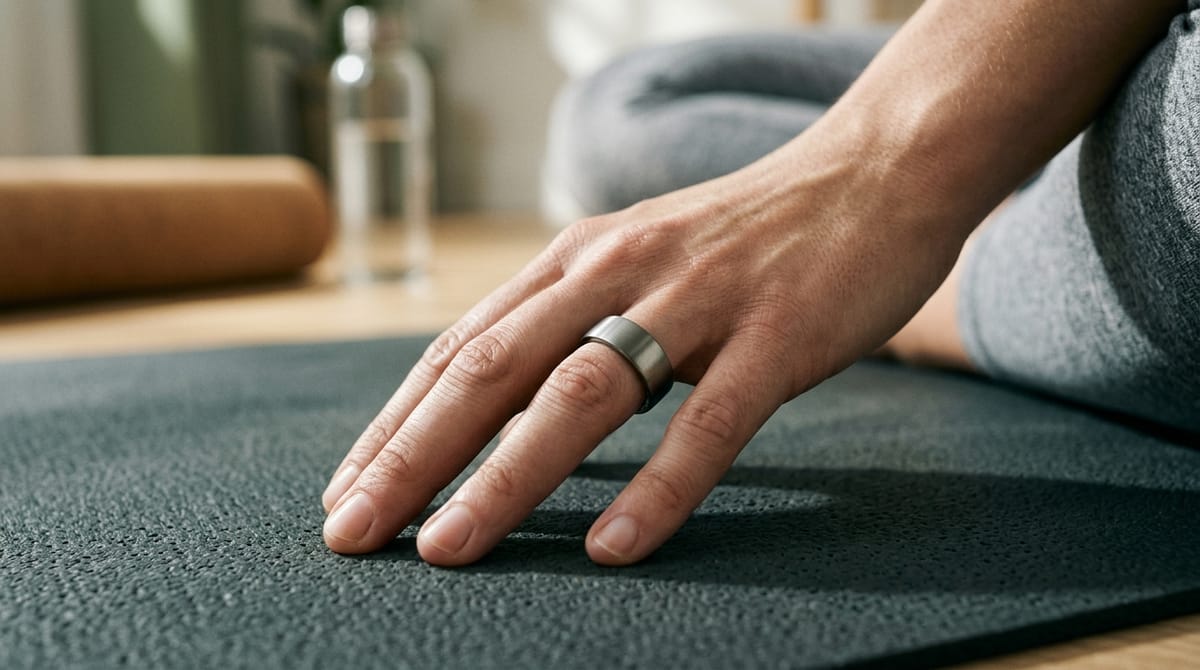
Cortisol is the body's primary stress hormone, released by the adrenal glands in response to physical or psychological stressors. Chronic cortisol elevation is associated with cardiovascular risk, metabolic syndrome, sleep disruption, and cognitive symptoms. There's growing interest in tracking cortisol patterns for wellness purposes - but cortisol itself can only be measured by blood, saliva, or urine tests, not by any consumer wearable. Smart rings track the downstream physiological signature instead: HRV, resting heart rate, sleep architecture, and recovery. This guide explains what the ring actually measures, the research evidence behind the cortisol-HRV connection, and how to use the data for practical stress management.
How does HRV relate to cortisol?
The connection between heart rate variability (HRV) and cortisol is well-documented in the cardiology and stress-research literature. The mechanism: cortisol shifts the autonomic nervous system toward sympathetic ('fight-or-flight') dominance and away from parasympathetic ('rest-and-digest') control. HRV is generated primarily by the parasympathetic vagus nerve - so when cortisol is elevated, HRV is suppressed.
Specifically, the research shows three robust patterns:
- Acute cortisol spike (single stress event): HRV drops 20-40% within minutes of the cortisol rise, recovers within hours of cortisol normalisation. The ring catches this in nightly HRV data following a high-stress day.
- Chronic cortisol elevation (sustained stress over weeks): Baseline HRV declines by 15-30% across the affected window. The ring catches this as a 28-day rolling average decline.
- Cortisol awakening response (CAR) disruption: The normal morning cortisol rise (peaking 30-45 min after waking) is blunted or absent in chronic stress states. The ring catches this indirectly - the morning HRV pattern is disrupted, with the typical 6-9am recovery curve flattened.
The practical implication: HRV is a useful proxy for cortisol-mediated stress in the absence of direct measurement, particularly for tracking longitudinal trends.
What metrics actually indicate stress on a smart ring?
Four metrics tell the stress story on a 2026 smart ring:
HRV (overnight RMSSD or pNN50). The single most useful metric. Lower = more stress. The 28-day rolling average is the meaningful view; single-night HRV is too noisy to act on.
Resting heart rate (overnight average). Elevated resting HR is consistent with sympathetic activation. A sustained 5-10 bpm increase over 28 days vs personal baseline is meaningful. Single-night variation is noise.
Sleep architecture (deep + REM duration). Cortisol elevation reduces deep sleep duration and shifts deep sleep earlier in the night. REM sleep is also reduced. The ring's sleep stage tracking surfaces this clearly.
Skin temperature trend (deviation from personal baseline). Sustained cortisol elevation causes mild skin temperature elevation (sympathetic-driven peripheral vasoconstriction reduces heat dissipation). The ring's temperature deviation graph shows this.
What is NOT a useful stress indicator on the ring: daily step count, single-day activity score, single-day readiness score. These are too noisy for stress tracking - the longitudinal view of HRV and sleep architecture is the actionable signal.
Which smart ring is best for stress tracking?
Ultrahuman Ring Pro (£449, no subscription). The Stress PowerPlug is the most explicit stress feature set in 2026. The dashboard surfaces HRV trend, resting HR trend, and a composite stress score - alongside the optional integration with the Ultrahuman M1 CGM if you also want metabolic stress markers (post-prandial glucose volatility correlates with cortisol patterns). Best for stress-focused users wanting an integrated dashboard.
Oura Ring 4 (£399 + £5.99/month subscription). No dedicated 'stress' feature but the Readiness score (Oura's daily composite) is essentially a stress proxy. Mature women's-health and recovery features. Strongest research-cited validation for the underlying algorithms. Subscription fatigue is the main hesitation.
RingConn Gen 3 (£349, no subscription). The raw HRV, RHR, and sleep stage data are all there. No dedicated stress dashboard - you'd interpret the data yourself. Best for users prioritising no-subscription ownership and comfortable with manual analysis.
Samsung Galaxy Ring (£399). Solid data, particularly within the Samsung Health ecosystem. Less developed dedicated stress framing than Ultrahuman.
How do you use the data for actual stress management?
Practical use of the ring data:
- Set a 28-day rolling baseline. Compare current 28-day HRV average to personal baseline (not population averages). Personal baseline accumulates over the first 8-12 weeks of ring ownership.
- Watch for 3+ consecutive months of HRV decline. Single-week drops are noise. Three consecutive months of declining 28-day average is the signal that warrants intervention (more sleep, less caffeine, less alcohol, more strength training + walking, stress-reduction techniques).
- Use the morning HRV pattern as a proxy for CAR. If the morning HRV recovery curve (typical pattern is sharp recovery between 6-9am) is flattened or absent, the cortisol awakening response is disrupted - a meaningful chronic stress signal.
- Compare HRV across stressed vs. low-stress weeks. A high-pressure work week followed by a holiday week gives a clean comparison. The HRV difference is the stress impact - typically 15-30% lower during stressed weeks for office workers.
- Bring the data to medical consultations selectively. If you're consulting your GP about chronic stress, fatigue, or insomnia, the 90-day HRV + sleep summary is useful supportive evidence. It doesn't replace clinical assessment but it provides objective context for what you're describing subjectively.
Frequently asked questions
Can a smart ring actually measure cortisol?
Is HRV actually a good proxy for stress?
Which smart ring has the best stress feature?
Should I get a saliva cortisol test alongside the smart ring?
Will the ring detect cortisol changes from HRT or other medications?
HRV Explained for Smart Ring Users
Smart Ring for Menopause UK 2026

Best Smart Ring for Stress and Recovery 2026