Smart Ring for Menopause UK 2026: HRV, Hot Flushes, Sleep
Smart rings for menopause + perimenopause: HRV trends, hot flush detection, sleep tracking. Oura, Ultrahuman, RingConn compared for UK women in 2026.
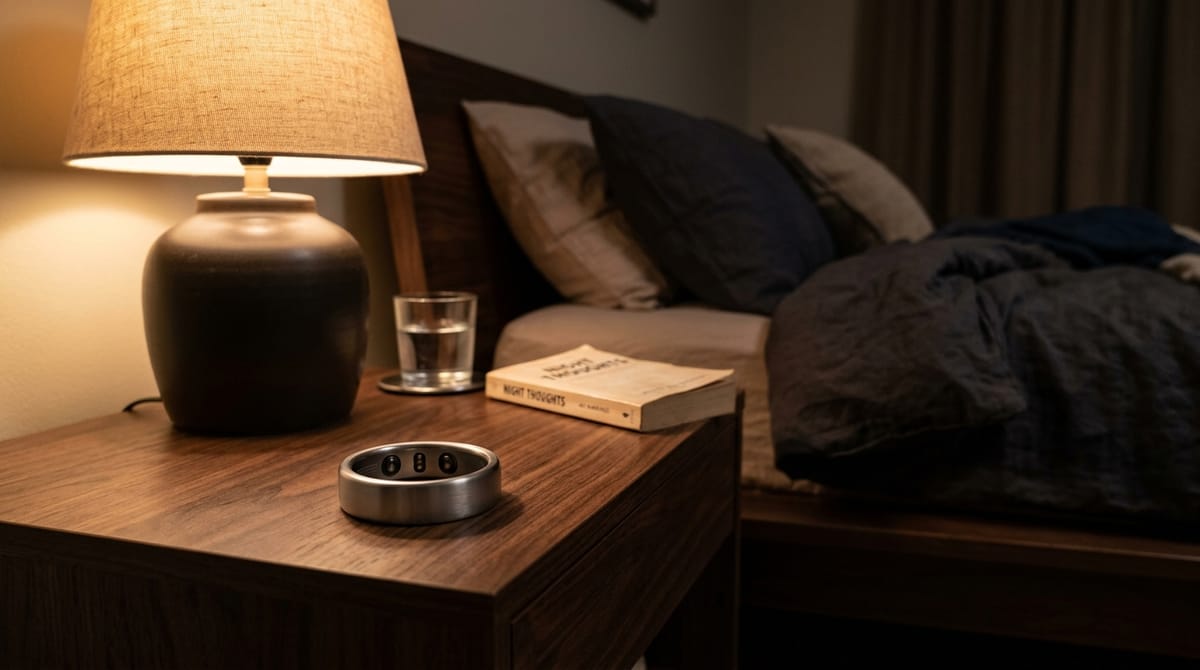
Perimenopause and menopause produce a recognisable cluster of physiological changes - HRV decline, vasomotor symptoms (hot flushes and night sweats), sleep disruption, mood fluctuations, and shifts in cardiovascular and metabolic markers. Smart rings sit at an unusual intersection: they're worn 24/7 (so they catch the night-time hot flush data that smartwatches miss), they track HRV (a meaningful marker of the autonomic nervous system stress that menopause produces), and they integrate skin temperature (now standard on the 2026 generation of rings, useful for menstrual cycle tracking in perimenopause and for hot flush pattern detection). This guide covers what UK women in their 40s and 50s actually get from a smart ring during the menopause transition.
What does perimenopause do to your HRV?
Heart rate variability (HRV) is the variation between heartbeats. Higher HRV reflects a more responsive autonomic nervous system - better recovery, stronger stress response. Lower HRV reflects sustained physiological stress, inadequate recovery, or both. The cardiology research literature consistently shows HRV declines through perimenopause, primarily because the loss of oestrogen reduces vagal tone (the parasympathetic 'rest and digest' branch of the autonomic nervous system).
For UK women in the 40-55 age band, a typical HRV trajectory looks like:
- Pre-perimenopause (mid-30s baseline): HRV measured on the ring's overnight sleep window is typically 35-55 ms (per the RMSSD metric most smart rings use)
- Early perimenopause (late 30s-40s): HRV starts trending down with cycle-related variability. Drops of 15-25% across consecutive 6-month windows are common.
- Late perimenopause / menopausal transition (mid-40s-early 50s): HRV often drops below 25 ms on average nights, with significant volatility around hot flush nights (which can drop HRV by 30-50% for that night specifically).
- Post-menopause (after 12 months without periods): HRV stabilises at a new, lower baseline. If lifestyle factors are managed (exercise, sleep, stress), it can recover to 25-35 ms across years.
The practical use of a smart ring during this trajectory isn't to obsess about the absolute number - it's to spot the volatility pattern. A sudden 30% HRV drop following a stressful week is a real signal to prioritise recovery (more sleep, less alcohol, less HIIT, more strength + walking). The longitudinal view also catches gradual improvements - the year you commit to consistent sleep and resistance training often shows a 20-30% HRV recovery on the ring.
Can a smart ring detect hot flushes?
The 2026 generation of smart rings includes skin temperature sensors that can detect the temperature spikes associated with hot flushes - particularly the night-time vasomotor symptoms that disrupt sleep. The accuracy varies by brand:
Oura Ring 4 (with the Hot Flush detection feature, rolled out in 2025). Oura's algorithm specifically flags overnight temperature spikes and correlates them with sleep disruption. The Hot Flush feature distinguishes between general temperature elevation (illness, room temperature, alcohol) and the rapid-rise-then-fall pattern that characterises vasomotor symptoms. UK Oura users report this feature delivers reliable pattern-matching after 4-8 weeks of baseline data accumulation.
RingConn Gen 3 (skin temperature trend tracking, no specific hot flush feature). RingConn surfaces skin temperature trends across nights. Users can identify the pattern manually - the spike-then-drop signature of a hot flush is visible in the data even without an algorithm-driven flag. The advantage is no subscription required to access the data.
Ultrahuman Ring Pro (PowerPlugs include a Menopause Tracker module). Ultrahuman's PowerPlug architecture allows the user to enable specific tracking modules. The Menopause Tracker is one of several PowerPlugs available, surfacing hot flush detection alongside cycle phase tracking for perimenopausal users.
Samsung Galaxy Ring (skin temperature tracking via Samsung Health). Samsung's implementation surfaces temperature data through Samsung Health rather than a ring-specific app. Hot flush detection is not algorithm-flagged but is visible in the raw data.
Practical use for symptom tracking: most UK GPs now accept smart ring sleep-and-temperature data as supportive evidence when discussing HRT consideration or evaluating progress on existing HRT. The data isn't diagnostic but it's a useful piece of the objective-evidence picture alongside the validated symptom scales (the Greene Climacteric Scale or the Menopause Rating Scale) that the GP will typically administer.
How does menopause affect smart ring sleep tracking?
Sleep disruption is one of the most commonly reported menopause symptoms - around 60-70% of UK women in the menopausal transition report meaningful sleep changes. The smart ring's sleep tracking surfaces three specific patterns:
Reduced deep sleep duration. Most perimenopausal users see deep sleep (NREM stages 3-4) drop from a typical 90-120 minutes per night to 50-80 minutes. The ring's sleep stage detection shows this clearly. The reduction correlates with daytime fatigue, cognitive symptoms ('brain fog'), and reduced recovery from exercise.
Increased wake-after-sleep-onset (WASO). The night-time wakings - often coinciding with hot flushes - show up as 20-40 minutes of additional wake time per night versus pre-perimenopause baseline. The ring's continuous tracking catches these even when the user doesn't remember waking.
Reduced REM sleep efficiency. REM sleep tends to drop modestly in proportion to overall sleep disruption. The ring's sleep stage graph makes this visible across weeks - useful for evaluating whether interventions (sleep hygiene, HRT, magnesium, melatonin) are restoring function.
The longitudinal view is the meaningful one. Single nights of bad sleep aren't a useful data point during perimenopause; the 28-day rolling average and the trend over 3-6 months tell you whether you're stabilising, improving, or declining. Most rings (Oura, RingConn, Ultrahuman) surface this longitudinal view well; Samsung Galaxy Ring is less mature on the historical trend interface.
Which smart ring is best for UK menopause use in 2026?
The three strongest choices for UK women in 2026:
Oura Ring 4 (£399 + £5.99/month subscription). The strongest menopause-specific feature set in 2026, with the rolled-out Hot Flush detection, Cycle Insights extended into perimenopause, and the most mature women's-health app integration. Subscription fatigue is the main hesitation - £71.88/year for the membership on top of a £399 hardware cost is a meaningful spend. For women genuinely managing complex menopause symptoms, the feature-set premium is justified; for women wanting basic objective data without subscription cost, RingConn is the alternative.
RingConn Gen 3 (£349, no subscription). The no-subscription approach is the differentiator. Skin temperature trend tracking gives the underlying data; you do the pattern-matching manually. SCOP of analysis is lower than Oura but the raw data is genuinely useful. Best for women comfortable interpreting their own trend graphs and prioritising lifetime ownership cost.
Ultrahuman Ring Pro (£449, no subscription). The PowerPlug Menopause Tracker is the strongest dedicated menopause module among the no-subscription rings. PowerPlug architecture means you can also enable companion modules for stress tracking, sleep stage analysis, and the Ultrahuman M1 CGM if you choose to add continuous glucose monitoring during the perimenopausal metabolic shift. Best for women who want sophisticated tooling without subscription lock-in.
Less compelling for the menopause use case specifically: Samsung Galaxy Ring (decent data but Samsung Health menopause module less developed); Amazfit Helio (good value but lighter feature set); Apple smart ring (still rumoured for 2027 - not a 2026 option).
One further design is worth knowing about even though it is not a UK option: the Movano Evie Ring is the only mainstream ring built women's-health-first rather than adapted to it, and it carries no subscription. It has only ever been sold in the US, so treat it as context for where the category is heading rather than something to shortlist.
How do you actually use the ring data during menopause?
Practical guidance for getting useful information out of the ring data:
- Set a 28-day rolling average as your baseline view. Single-day numbers are noise during perimenopause - the cycle volatility and stress-event reactivity make day-by-day comparisons unhelpful. The 28-day rolling average smooths through this.
- Track three metrics: HRV, deep sleep duration, hot flush count. Other metrics (resting HR, total sleep time, activity score) are useful but secondary. These three give the strongest signal-to-noise ratio for the menopause use case.
- Compare quarter-over-quarter, not week-over-week. Meaningful changes during perimenopause take months to show up clearly. Quarterly comparisons (Q1 vs Q2 vs Q3 vs Q4) surface the trend.
- Bring the data to your GP appointment. Most UK GPs now welcome smart ring data as supportive context for menopause consultations - especially for HRT decision-making. Print or screenshot the 90-day HRV + sleep summary before the appointment.
- Don't over-react to single bad nights. One night of poor HRV after a stressful day isn't a meaningful signal. Three consecutive months of declining 28-day average is.
Frequently asked questions
Will a smart ring help me decide whether to start HRT?
Can a smart ring detect early perimenopause?
Is the Oura subscription worth it for menopause use?
Will my GP take smart ring menopause data seriously?
Should I keep the ring on through HRT initiation?
Does the ring track perimenopause cycle changes?
Best Smart Ring for Women 2026
Best Smart Rings 2026
HRV Explained for Smart Ring Users
Smart Ring for Cycle Tracking UK 2026

Smart Ring for PCOS UK 2026
Considering a smart ring for menopause?
The Oura Ring 4 is the strongest dedicated menopause feature set in 2026. The RingConn Gen 3 is the strongest no-subscription alternative.