Smart Ring vs Apple Watch Detailed Comparison UK 2026
Smart ring vs Apple Watch UK 2026: form factor, battery, ECG, fall detection, app ecosystem - which device for whom.
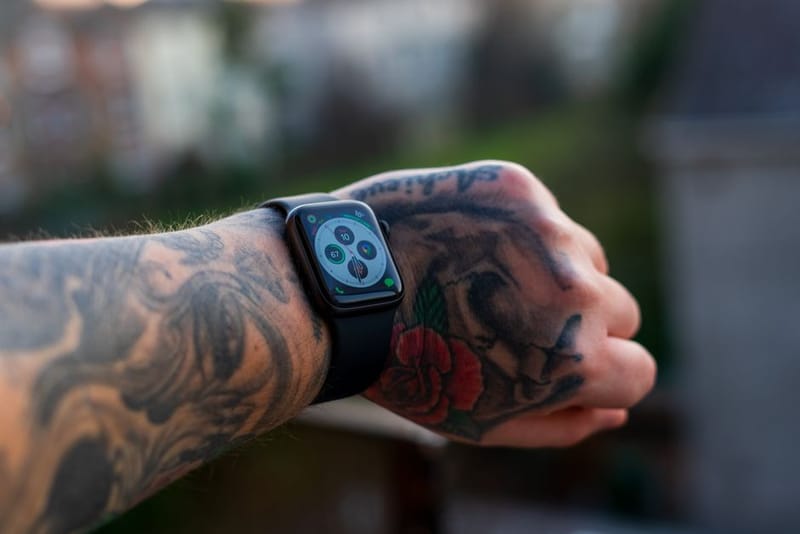
Smart rings and Apple Watch occupy overlapping but distinct positions in the wearable health market. This UK 2026 comparison covers the actual trade-offs.
How do the form factors differ?
What you actually wear.
Smart ring:
- 2.5-5g titanium / stainless steel band, IP68 waterproof.
- Discreet - many people don't notice it.
- No screen, no notifications.
- Removable for shower/swim only if desired (most models are waterproof to 100m).
- One size per finger - sizing kit essential pre-purchase.
Apple Watch:
- 35-50g aluminum / stainless steel / titanium case, 40-49mm.
- Highly visible on wrist; design choice.
- Always-on display (or wake-on-raise) shows time + notifications.
- Removable wristband options (sport / leather / metal).
- Series 10 + Ultra 2 + SE: 3 size options.
Sleep-wear considerations:
- Smart ring: 95%+ of users wear it sleeping (small + light).
- Apple Watch: ~40% of users wear it sleeping (heavy + screen brightness disturbing some).
- If sleep tracking is a primary goal, smart ring has the wear-time advantage.
Which has better health and fitness sensors?
What each measures.
Heart rate (24/7):
- Smart ring: continuous PPG monitoring, 5-min intervals default.
- Apple Watch: continuous PPG monitoring, similar default cadence.
- Accuracy comparable at rest; ring slightly better at sleep (finger circulation more stable than wrist).
ECG (medical-grade heart rhythm):
- Smart ring: NO (PPG only).
- Apple Watch: YES (single-lead ECG via wrist + finger).
- Apple Watch detects atrial fibrillation; smart rings don't.
SpO2 (blood oxygen):
- Smart ring: continuous + spot measurements.
- Apple Watch: spot measurements + sleep average.
- Comparable for trends.
Skin temperature:
- Smart ring: continuous overnight.
- Apple Watch: continuous overnight (Series 8+).
- Comparable.
HRV (Heart Rate Variability):
- Smart ring: precise nightly HRV during sleep (most accurate use case).
- Apple Watch: daily HRV during random measurements - less consistent than ring.
- Ring advantage for HRV trend tracking.
GPS:
- Smart ring: NO.
- Apple Watch: YES (built-in GPS, can run without phone).
Fall detection + Emergency SOS:
- Smart ring: NO.
- Apple Watch: YES (fall detection auto-calls emergency contacts).
Which is better for workout and activity tracking?
Sport use cases.
Smart ring workout tracking:
- Auto-detects workouts (motion + HR spike); user can tap-confirm.
- HR accuracy: rest 98%, steady cardio 95%, HIIT 85-92%, strength 75-90%.
- NO GPS - must pair with phone for route/pace.
- NO pace/cadence/power for cycling.
- Best for: 24/7 HR baseline + recovery scoring trends.
Apple Watch workout tracking:
- 200+ workout types, auto-detection good.
- HR accuracy: rest 96%, steady cardio 96%, HIIT 92-95%, strength 88-92%.
- GPS + altimeter for runs/hikes/cycling routes.
- Apple Maps + Strava + WorkOutdoors + many app integrations.
- Best for: structured training + route tracking + Apple ecosystem.
Where smart ring matches/exceeds Apple Watch:
- Sleep tracking (better wear-time + finger position).
- HRV during sleep (most accurate measurement context).
- Recovery scoring trends over weeks/months.
- Battery longevity for travel.
How do the software ecosystems compare?
Where Apple has an advantage.
Apple Watch:
- Tight integration with iPhone, Macbook, AirPods, HomePod, CarPlay.
- watchOS + 100,000+ apps via App Store.
- Calls, texts, payments, music, podcasts, navigation, Smart Home control.
- Notifications + reply from wrist.
- Apple Health app on iPhone is comprehensive.
- Subscription: Apple Fitness+ optional (GBP 9.99/month, exercise classes).
Smart ring:
- Companion smartphone app (Oura, Ultrahuman, Samsung Health, RingConn).
- No third-party apps.
- NO calls, texts, payments, music control.
- NO notifications.
- Smartphone integration via standard health APIs (Apple Health / Samsung Health / Google Fit).
- Subscription: Oura GBP 5.99/month, Ultrahuman GBP 8.99/month, Samsung Galaxy Ring free, RingConn free.
What does each cost to own?
Real-world price.
Apple Watch costs (UK 2026):
- Apple Watch SE 2: GBP 219 (aluminum 40mm).
- Apple Watch Series 10: GBP 399-579 (aluminum/stainless, 42-46mm).
- Apple Watch Ultra 2: GBP 799 (titanium 49mm).
- Cellular variants: +GBP 100-150.
- Apple Fitness+ subscription: GBP 9.99/month (optional).
- Battery replacement (after 3-4 years): GBP 100-150.
Smart ring costs (UK 2026):
- Oura Ring 4: GBP 349-449.
- Ultrahuman Ring AIR: GBP 299-379.
- Samsung Galaxy Ring: GBP 399 (NO subscription required).
- RingConn Gen 2: GBP 249-329 (NO subscription required).
- Subscription: Oura GBP 5.99/month, Ultrahuman GBP 8.99/month (others free).
- Battery replacement (after 3-4 years): full retail price (NO repair service).
3-year TCO:
- Apple Watch Series 10 + Fitness+: GBP 760-820.
- Oura Ring 4 + subscription: GBP 565-665.
- Samsung Galaxy Ring: GBP 399.
- Smart rings have lower TCO if you skip subscription brands.
Should you buy a smart ring or an Apple Watch?
Which one for whom.
Smart ring is right if:
- You prioritise sleep tracking + HRV trends.
- You want discreet wear (no screen).
- You hate daily charging routines.
- You don't need GPS/calls/notifications from wrist.
- You're an Android user (Samsung Galaxy Ring fits Samsung ecosystem).
Apple Watch is right if:
- You're an iPhone user wanting tight ecosystem integration.
- You want ECG (atrial fibrillation detection).
- You want fall detection / emergency SOS.
- You want notifications + calls from wrist.
- You do structured training needing GPS + workout app variety.
Both make sense if you:
- Want comprehensive health monitoring + can afford GBP 600-700+ combined.
- Care about sleep tracking AND active workout pacing.
- Want ring for nights + Apple Watch for days.