Smart Ring vs Whoop Strap UK 2026: Which Is Better?
Smart ring (Oura, Ultrahuman, RingConn) vs Whoop strap: form factor, subscription model, accuracy, athlete vs general use. The honest decision guide.
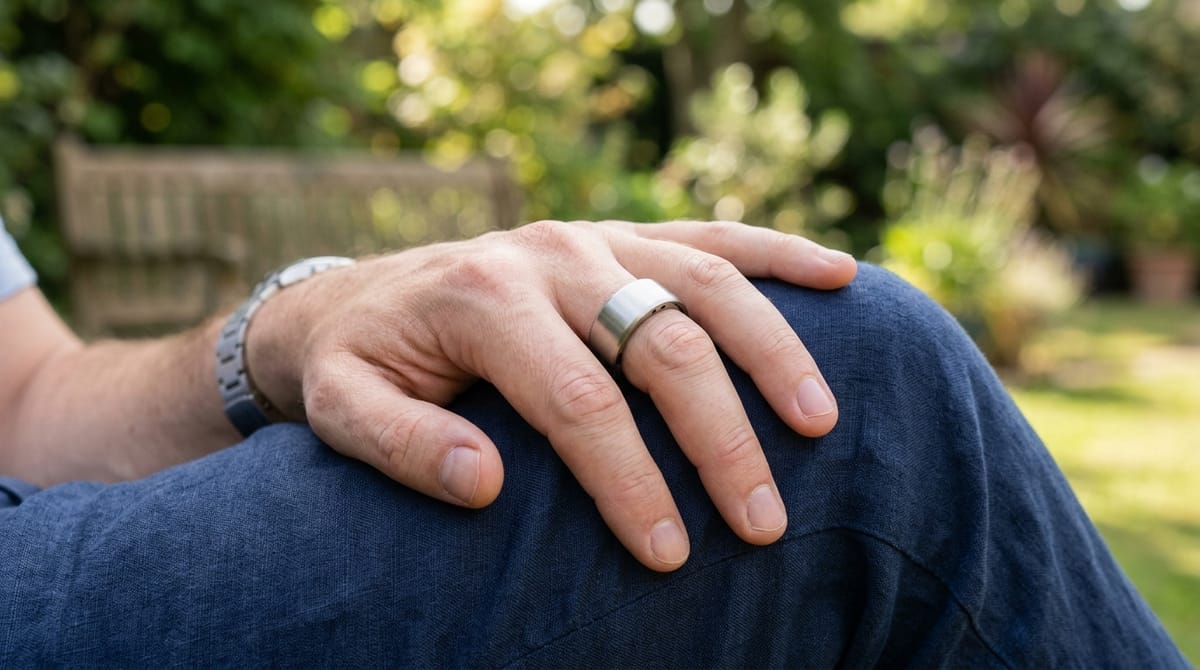
If you've narrowed your wearable choice down to 'smart ring or Whoop strap' you've already filtered out the noisy options - the obvious smartwatches with their notifications and short battery life. What's left is two devices doing roughly the same job from different positions on the wrist (or finger). This guide breaks down where each pulls ahead.
Form factor: ring vs strap
The biggest day-to-day difference.
The wristband-vs-ring decision is the one most users care about most. A few real differences:
- Smart ring: titanium / ceramic ring you wear on your index or middle finger. Almost invisible after the first day, no display, no tap interface. Charges 1-2x a week (typical 4-7 day battery on current generation). Sized via a sizing kit you order before purchase. Catches occasionally on gloves, gym chalk, weights bar.
- Whoop strap: fabric band on the wrist (no screen), or a Whoop-branded compression sleeve that fits anywhere on the arm. Charges via a slide-on pack you can swap mid-wear without removing the strap (no downtime). Adjustable size, no sizing kit. Looks like a fitness band.
Both are designed to disappear into the background. The smart ring is more discreet on average; Whoop is less obvious to people who already wear watches anyway.
Subscription cost: a real decision factor
Three models on the table - one is genuinely subscription-free.
Cost-of-ownership over 3 years is where the biggest gap is:
- Whoop: subscription only - GBP 27/mo (annual plan) for the Whoop 5.0, no upfront device cost (the device is included with the subscription). 3-year total: ~GBP 972.
- Oura Ring 4: device GBP 349-399 + Oura membership GBP 5.99/mo (GBP 71.88/yr). 3-year total: ~GBP 564 (mid device price + 3yr membership). Some sleep/recovery features are locked behind the membership.
- Ultrahuman Ring Pro: device ~GBP 349, no subscription. All features included. 3-year total: GBP 349.
- RingConn Gen 3: device ~GBP 299, no subscription. 3-year total: GBP 299.
- Samsung Galaxy Ring: device GBP 399, no subscription, all features included if you're in the Samsung ecosystem. 3-year total: GBP 399.
The gap is dramatic. Whoop charges 3x what the no-subscription rings cost over 3 years - which buys you a different (athlete-oriented) feature set rather than the same set with extra polish. See our no-subscription smart ring guide for the deeper dive.
Sleep accuracy: smart rings have the edge
Both are good - rings are more consistent.
For sleep-stage detection, sleep duration, and resting heart-rate accuracy in independent comparisons against polysomnography (PSG, the clinical gold standard):
- Smart rings (Oura, RingConn, Ultrahuman) consistently achieve 80-85% sleep-stage agreement with PSG. Sleep duration is typically within 5-10 minutes.
- Whoop is in the same band (~80% sleep-stage agreement, similar duration accuracy) but a wrist-worn device sees more motion noise from arm position changes during the night, which can blur deep-sleep / REM boundaries on restless sleepers.
- Both struggle equally with daytime naps, jet lag, and very short sleep windows. Neither device replaces a clinical sleep study.
For sleep specifically, both are at the 'good enough for self-tracking, not clinical' tier. The ring's finger position is structurally easier for stable readings, but the gap is small in practice.
Training + recovery: Whoop's home turf
Strain scores, contextual heart-rate, athlete-grade integrations.
This is where Whoop earns its premium price. Three concrete advantages for serious athletes:
- Strain score: Whoop's proprietary 0-21 score combines heart-rate, HRV, and workout duration to quantify physical load per session and per day. Smart rings have nothing equivalent - they report HR + HRV but don't tie them to workout context.
- Continuous heart-rate during exercise: Wrist optical heart-rate during high-intensity intervals is more accurate than finger optical (which struggles with finger motion + chalk + gloves). Whoop is the better choice if you do CrossFit, Olympic lifting, climbing, or martial arts.
- Recovery score: Whoop's morning recovery score (0-100%) is widely used by athletes to gate hard training. Smart rings have similar 'readiness' / 'recovery' scores but the Whoop version is more deeply tied to its strain history.
For non-athlete users (general health tracking, sleep optimisation, stress monitoring), these advantages are mostly academic. Whoop adds complexity you may not benefit from.
Comfort + everyday wear
The single biggest factor in actually wearing the device.
The wearable that gives you the best data is the one you actually wear. A few notes on real-world comfort:
- Smart ring sleep: almost universally praised. Most users report forgetting they're wearing it within a week. Issues: warm weather can cause finger swelling that makes the ring tight; some users develop a small skin-pressure mark from prolonged wear.
- Smart ring daytime: mostly fine. Issues: tight in cold weather, catches on gym work, can damage scratchable surfaces (sapphire/glass screens, soft wooden tables).
- Whoop sleep: fine for most, but wrist-worn devices catch sheets and shift position more often. The strap can leave faint compression marks on the forearm.
- Whoop daytime: highly visible - looks like a fitness band. Some users feel self-conscious in formal settings; the bicep / forearm sleeve options solve this.
Most people who own both end up favouring the form factor that fits their working environment, not the one with better specs.
Quick decision matrix
Which one fits your use case.
Pick Whoop if:
- You're a serious athlete (10+ hours/week training) and want strain + recovery tied to workout context.
- You want the wearable mostly during high-intensity workouts where finger-optical HR struggles.
- You're comfortable with a GBP 27/mo subscription as the cost of ownership.
Pick a smart ring if:
- You mostly want sleep + recovery + daily wellness tracking (the larger general-user case).
- You'd find a wrist device too obtrusive for office or formal settings.
- You want a one-off purchase with no subscription - Ultrahuman Ring Pro or RingConn Gen 3 deliver this.
- You want significantly longer battery life (4-7 days vs Whoop's 4-5).
Pick the Oura Ring 4 specifically if you want the most polished smart ring app + the largest user community for sleep tracking; you're OK with the GBP 5.99/mo membership for full feature access. See our Oura Ring 4 review for the deeper dive.