Comparison · 2 picks
Oura Ring 4 vs RingConn Gen 2: The Subscription Question
Affiliate disclosure: we may earn a commission when you buy through links on this page, at no extra cost to you. Our verdicts are our own and are not influenced by compensation. As an Amazon Associate I earn from qualifying purchases.
The Oura Ring 4 and the RingConn Gen 2 are the two most-cross-shopped smart rings in the UK in 2026, and the trade-off between them is unusually clean: £349 plus roughly £70 a year for Oura's algorithms, or £239 with no subscription for RingConn's hardware advantages. The right answer depends almost entirely on whether you'll pay monthly for the analytics, and whether 4–7 days or 10–12 days of battery life matters more in your routine. This guide walks through both sides honestly, surfaces what independent testing has actually shown about each ring's accuracy, and ends with a clear pick for each buyer type. A July 2026 wrinkle: since the Oura Ring 5 launched, remaining Ring 4 stock is often heavily discounted below its £349 list price, which narrows the upfront gap - though the subscription still keeps Oura's long-run cost higher.
At a glance
All 2 options side by side.
 |  | |
|---|---|---|
| Price | £349 | £259 |
| Best for | Best for sleep-led users who already expect to budget a subscription and want the most refined algorithms on the market. | Best for buyers who want a credible Oura alternative without the recurring monthly fee, or who travel and value the charging case. |
| Review | Read review → | Read review → |
| Buy |
The picks in detail
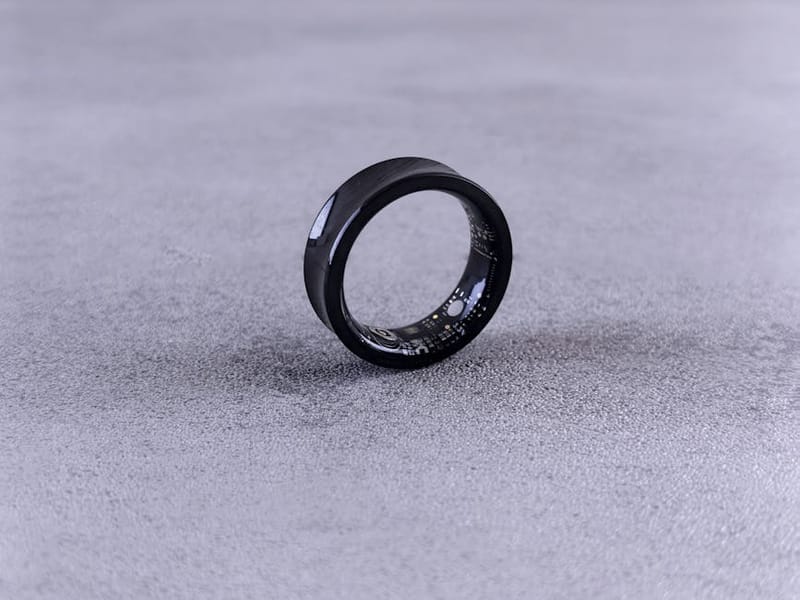
Oura Ring 4
Bottom line. Best for sleep-led users who already expect to budget a subscription and want the most refined algorithms on the market.
Pros
- The most refined sleep-stage and HRV algorithms in the category, repeatedly validated against polysomnography in independent testing
- Titanium build with recessed PPG sensors that survive daily wear - most users report two-to-three years before noticeable scuffs
- Four-to-seven day battery in normal use, with a small, fast-charging puck included in the box
- Multiple sizes (US 6–13) and three finishes (Heritage, Stealth, Gold/Rose Gold) for fit and aesthetics
- Genuinely innovative women's-health and metabolic-load metrics that competitors are still catching up on
Cons
- Oura Membership at £5.99/month is required to access the bulk of features - it adds £71.88 to the first-year cost
- No always-on heart rate or live workout heart-rate broadcast - fitness use is supplementary rather than primary
- No continuous SpO2 reading - overnight SpO2 is a spot-check during sleep, not 24/7
- Higher-priced finishes (Stealth, Gold) command a £50–£200 premium for cosmetic differences only
- Closed ecosystem - your historical data lives inside the Oura app and is difficult to export in a portable form
More buying options (1)
- Oura Check price View deal →
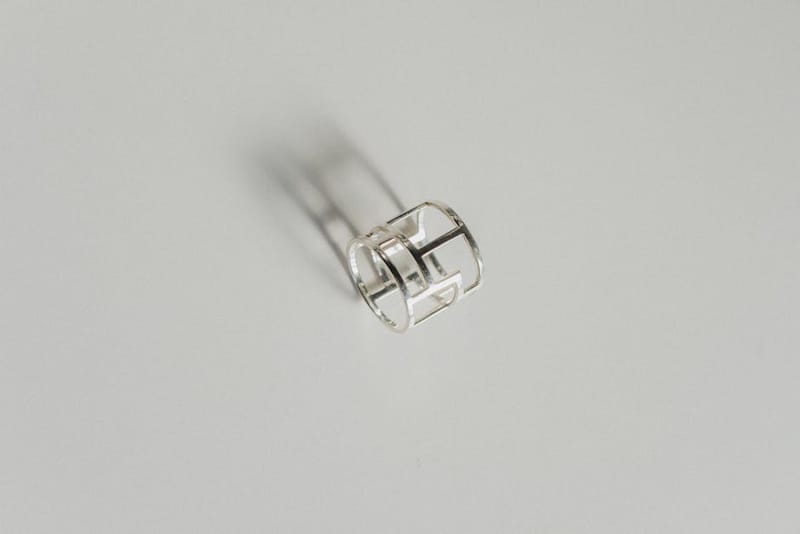
RingConn Gen 2
Bottom line. Best for buyers who want a credible Oura alternative without the recurring monthly fee, or who travel and value the charging case.
Pros
- No subscription - every feature is included with the hardware purchase, the same value proposition as Ultrahuman at a lower price
- 10 – 12 day real-world battery life is roughly double the rest of the category and a meaningful difference for daily wearers
- Portable charging case ships in the box and provides multiple top-ups without finding the puck - travel-friendly
- Genuinely competitive entry price at £259 - undercuts the Oura Ring 4 (£349) and Ultrahuman Ring Air (£299) on hardware alone
- Three understated finishes work as either a smart ring or a passable everyday ring; the form factor is one of the slimmer profiles in the category
Cons
- Sleep-stage and HRV algorithms are visibly less refined than Oura's and slightly behind Ultrahuman's in independent comparisons
- 5 ATM water resistance is fine for showering and shallow swimming but trails Ultrahuman and Oura's 10 ATM rating for water sports use
- App is functional rather than polished - fewer narrative insights, more raw-number dashboard than the Oura or Ultrahuman experiences
- Smaller brand with less long-term financial visibility than Oura - buyers should account for the residual support risk over a multi-year ownership horizon
- Limited third-party integrations and a closed ecosystem similar to rivals - historical data effectively lives in the RingConn app
More buying options (1)
- RingConn Check price View deal →
How do the numbers stack up?
Headline differences
- Hardware price (UK, 2026)
- Oura £349 list (widely discounted since the Ring 5 launch) · RingConn £239
- Subscription
- Oura £5.99 / month (£69.99 / year if paid annually) · RingConn none, ever
- First-year total
- Oura ~£421 · RingConn £239
- Battery life
- Oura 4–7 days · RingConn 10–12 days
- Water resistance
- Oura 10 ATM · RingConn 5 ATM
- Charging
- Oura puck · RingConn portable case
- Material
- Both titanium with PVD coatings
- App polish
- Oura narrative-led · RingConn dashboard-led
- Sleep / HRV accuracy
- Oura class-leading · RingConn good but trails
Which one wins on subscription cost?
Oura Membership is £5.99 a month or £69.99 a year if paid annually. Without it, the Oura Ring 4 still records data but locks the bulk of the analysis - readiness scores, detailed sleep stages, HRV trends, women's cycle tracking, the narrative "why" of each daily summary. Buying an Oura ring without the subscription is the smart-ring equivalent of buying a printer without ink: the hardware works but the value proposition doesn't survive contact with the lock-screen.
Over five years of daily wear - the realistic lifespan of a titanium ring on a typical finger - the total Oura cost runs to roughly £349 hardware plus £300 subscription, or £649 total. The RingConn Gen 2 over the same five years costs £239. That's a £410 difference, almost double again the cheaper option's hardware price.
Whether that's worth it depends on what you'll use the ring for. If sleep quality is your primary reason to wear one, Oura's algorithm refinement is genuinely better and the subscription cost is part of the deal you signed up for. If you want quantified-self data without ongoing fees, RingConn's data is good - just not as polished in the presentation layer.
One 2026 update: with the Oura Ring 5 now the flagship, clearance discounts on remaining Ring 4 stock frequently bring its upfront price close to - or below - the RingConn's £239, so check current street prices. The subscription then becomes the deciding cost factor.
Which has the better battery for daily wear?
The 10–12 day battery on the RingConn Gen 2 is the single hardware spec where it materially beats Oura. The cadence of plugging in your ring matters more than the headline number suggests: a 5-day Oura battery means roughly six charging events per month; a 10-day RingConn battery means three. The Oura's puck charges quickly (around 30 minutes from empty), but you have to find it. The RingConn's portable case ships in the box, holds multiple full charges, and is the cleanest "forgot to charge it before a trip" answer in the category.
For users who already charge other wearables overnight, the battery gap is largely cosmetic - you'll plug both rings in on roughly the same schedule. For travellers and anyone who'd rather not think about charging at all, the RingConn's battery and case combination is a meaningful quality-of-life improvement.
Which is more accurate on sleep and HRV?
Oura's sleep-stage detection has been the subject of multiple independent validation studies against polysomnography (the clinical gold standard, used in sleep labs). The Oura Ring 3 was already the best wrist-or-finger consumer device for stage detection in most published comparisons; the Ring 4 builds on the same algorithm refinement with marginal but real gains. HRV nightly trends are similarly the category benchmark.
RingConn's Gen 2 is honest about being slightly behind - independent comparisons run by Quantified Scientist on YouTube and similar testers show its sleep-stage detection lands within 5–10 percentage points of Oura's accuracy on average nights, falling further behind on disrupted nights. For most users this gap is invisible in the day-to-day; for anyone making decisions based on the data - sleep specialists, athletes optimising recovery, chronic fatigue investigation - the Oura's refinement is the right buy.
Which is more durable and water-resistant?
Both rings survive showering, hand-washing, and the dishwater-and-rain incidents of daily life. The Oura's 10 ATM rating means it tolerates pool swimming and recreational snorkelling; the RingConn's 5 ATM rating tops out at shower and shallow-pool use and isn't appropriate for swim laps or watersports. The titanium body on both rings means a year of daily wear leaves cosmetic scuffs but not structural damage. Internal PPG sensors are recessed on the Oura, slightly more exposed on the RingConn - neither is field-replaceable, which is the smart-ring category's universal trade-off.
Which app and ecosystem is better?
The Oura app is the polished end of the category. Daily summaries lead with narrative - what slept well, what didn't, what the readiness score implies for today - and the deeper screens layer the raw numbers under that. Apple Health, Google Fit, and Strava integrations are mature and bidirectional. The Oura Circles feature surfaces shared trends with consenting friends and family.
The RingConn app is the more utilitarian end of the category. Numbers come first, narrative second; HealthKit and Health Connect integrations work but are less mature. There's no Oura-equivalent of Circles. None of this is a deal-breaker, but the daily-use feel is meaningfully different.
How do you decide between them?
Sleep is the primary reason you'd wear a smart ring, and you'll wear it for 2+ years: Oura Ring 4. Algorithm refinement compounds over time and the subscription becomes background noise.
You refuse subscriptions on principle, or you're buying for a family member who'd cancel anything billed monthly: RingConn Gen 2. The hardware data is good and there's no upsell pressure.
You travel several weeks a year and forget to charge wearables: RingConn Gen 2. The 10-day battery and case combination wins this scenario decisively.
You swim laps or do watersports regularly: Oura Ring 4. The 10 ATM rating is the practical floor for swim use; RingConn's 5 ATM is not.
You'll use the data for athletic recovery decisions or sleep-clinical follow-up: Oura Ring 4. Independent validation against polysomnography is meaningful here.
You want quantified-self data on a five-year time horizon at the cheapest total cost: RingConn Gen 2. £239 once is the lowest credible all-in spend in the category.
What does this comparison leave out?
If you're considering a third option, Ultrahuman is the obvious cross-shop - same no-subscription model as RingConn but with sharper algorithms. Our individual reviews go deeper on each ring's day-2 experience and edge cases: see the Oura Ring 4 review, the RingConn Gen 2 review, and the Ultrahuman Ring Air review for the long-form treatment of each.
Frequently asked questions
Can I use the Oura Ring 4 without a subscription?
Is the RingConn Gen 2 accurate enough for serious use?
Which has better app integration with Apple Health?
Can I switch from one to the other later?
How long do smart rings actually last?
Which one should you buy?
If you're already paying for two or three subscription services and £5.99 a month doesn't change your decision, buy the Oura Ring 4. The algorithms are meaningfully better, the app is more useful, and the polished daily-use experience is what you're paying for. If you're cost-sensitive, travel-led, or philosophically opposed to recurring fees on a piece of consumer hardware, the RingConn Gen 2 is the smart-ring that the rest of the category should be measured against on value - and the £239 total cost makes it the right starter ring for anyone trying the category for the first time without a long-term commitment.
Read the individual reviews
Each ring's review goes deeper on real-world use, app screenshots, and edge cases.