Comparison · 2 picks
Oura Ring 4 vs RingConn Gen 3: 2026 UK Comparison
Affiliate disclosure: we may earn a commission when you buy through links on this page, at no extra cost to you. Our verdicts are our own and are not influenced by compensation. As an Amazon Associate I earn from qualifying purchases.
The Oura Ring 4 is still the consensus top pick of the smart-ring market. The RingConn Gen 3 is the most credible challenger - the same generation of sensors as Oura, no subscription, a smaller but rapidly growing app ecosystem, and a price that lands roughly £100 below Oura's. Whether the gap is real depends on how seriously you take both the accuracy delta and the app delta.
The two-line summary: RingConn Gen 3 has closed the accuracy gap to a near-tie with the Oura Ring 4 on sleep tracking, and it has fully closed the gap on the basics. The remaining edge for Oura is the app, the ecosystem, and the long-term track record. Whether that edge is worth roughly £350 over three years is the question this guide tries to answer honestly.
At a glance
All 2 options side by side.
 | 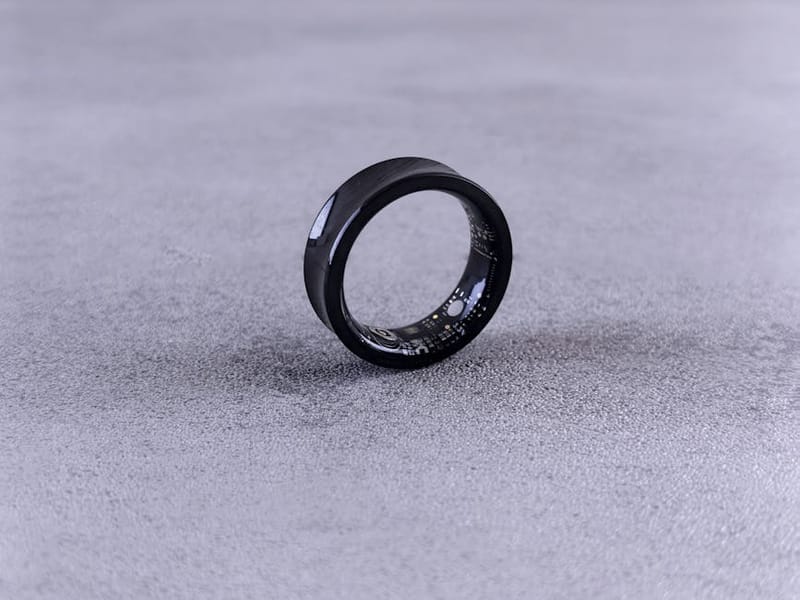 | |
|---|---|---|
| Price | £309 | £349 |
| Best for | The right pick if you want Oura-class accuracy with no subscription, and you can live with a less mature app ecosystem. | The right pick if you want the most mature app and ecosystem, and you actively use the curated interpretation. |
| Review | Read review → | Read review → |
| Buy |
The picks in detail
RingConn Gen 3
Bottom line. The right pick if you want Oura-class accuracy with no subscription, and you can live with a less mature app ecosystem.
Pros
- First smart ring with built-in haptic motor (vibration alerts for elevated HR, inactivity, step goals)
- Nighttime blood-pressure trend tracking - new metric class for the category
- 10-14 day battery life across the category's longer-lived end
- No subscription required - all features included with hardware
- Universal wireless charging case (size-agnostic) replaces Gen 2's awkward size-specific charger
- Titanium build with medical-grade epoxy interior
- 10 ATM water resistance (shower + swim compatible)
Cons
- £309 price closes the value gap vs Oura Ring 4 (£349 hardware) - no longer the budget no-sub pick
- Nighttime blood pressure tracking is trend-only, not clinical-grade or medically validated
- Haptic motor reduces battery life from 14 to 10-12 days when active
- Independent polysomnogram + chest-strap HRV validation data not yet published (CES 2026 launch)
- UK retail availability still building in mid-2026
More buying options (1)
- RingConn Check price View deal →
Oura Ring 4
Bottom line. The right pick if you want the most mature app and ecosystem, and you actively use the curated interpretation.
Pros
- The most refined sleep-stage and HRV algorithms in the category, repeatedly validated against polysomnography in independent testing
- Titanium build with recessed PPG sensors that survive daily wear - most users report two-to-three years before noticeable scuffs
- Four-to-seven day battery in normal use, with a small, fast-charging puck included in the box
- Multiple sizes (US 6–13) and three finishes (Heritage, Stealth, Gold/Rose Gold) for fit and aesthetics
- Genuinely innovative women's-health and metabolic-load metrics that competitors are still catching up on
Cons
- Oura Membership at £5.99/month is required to access the bulk of features - it adds £71.88 to the first-year cost
- No always-on heart rate or live workout heart-rate broadcast - fitness use is supplementary rather than primary
- No continuous SpO2 reading - overnight SpO2 is a spot-check during sleep, not 24/7
- Higher-priced finishes (Stealth, Gold) command a £50–£200 premium for cosmetic differences only
- Closed ecosystem - your historical data lives inside the Oura app and is difficult to export in a portable form
More buying options (1)
- Oura Check price View deal →
How has RingConn Gen 3 closed the gap?
The Gen 2 was always a credible challenger, but it sat clearly in the second tier behind Oura on sleep accuracy. The Gen 3 has materially improved on the same core hardware path - new PPG positioning, better motion artefact rejection, more polished post-processing - and the latest independent comparisons place it within touching distance of Oura's sleep model.
The HRV story is similar: Gen 3 produces credible nightly HRV trends that look right to a sleep scientist, with personalised baselines that have closed most of the drift gap Gen 2 had. The big remaining gap is in the readiness score's interpretation - Oura is unusually good at translating the readings into 'here is what you should do today'. RingConn's recovery score is honest but less actionable.
Which has the better app and ecosystem?
Oura. The Oura app has had years of iteration and the storytelling shows: morning readiness in plain English, contextual tips written by an actual research team, integrations with Apple Health and Google Health Connect that just work, third-party partner apps that genuinely talk to it.
RingConn's app has improved noticeably between Gen 2 and Gen 3, and it now does the basics well. Where it lags is in the interpretation layer - the readings are presented, the trends are graphed, the explanations are short. If your usage pattern is 'check the ring every morning and read what it tells me', Oura is the more rewarding experience. If your usage pattern is 'glance at the readings once or twice a week', the gap matters less.
What's the three-year cost picture?
Oura Ring 4 at £349 plus three years of £5.99 monthly subscription is roughly £565. RingConn Gen 3 at £249 with no subscription is £249. The gap is roughly £316 over three years.
This is the cleanest 'are you the kind of user who will actually use the app every day' question on the market. If yes, Oura's £316 over three years is good value for the curated experience. If no, RingConn lets you keep the £316 and still get most of the data you would have used anyway.
How does the battery compare?
RingConn wins on raw battery life - 10 to 12 days per charge against Oura's 7 to 8 - and the RingConn ships with a charging case that doubles as a portable battery, so the real-world top-up cadence is even friendlier. Oura's charging puck is fine but it is a counter-top puck, not a pocketable case.
If you travel a lot and like the idea of forgetting to charge for a week, the RingConn battery story is genuinely better. For everyone else the difference is marginal - both are happy multi-day rings.
What about build, comfort, and sizing?
Both rings are titanium with PVD coatings, both ship sizing kits before the actual ring goes out, and both are comfortable for full-time wear within a couple of days. Most users stop noticing either ring within a week.
The Oura finish is slightly more refined under close inspection - the inside curve is a touch more polished, the join lines are less visible. The RingConn finish is good for the price; it does not feel premium-luxury but it does feel premium-mid-range. Neither has noticeably protruding sensors. Both are rated for normal wet conditions (showering, washing up, light swimming) and neither is rated for sauna or deep diving.
What about UK availability, warranty, and long-term support?
Both are available in the UK through official channels. Oura sells via ouraring.com plus John Lewis, Currys, and Amazon UK. RingConn sells via ringconn.com and Amazon UK. Sizing kits are dispatched first on both, so the buying flow is the now-standard two-step.
Warranty is two years on both. Replacement parts are easier to source for Oura simply because the volume is higher. RingConn's UK support presence has improved significantly since the Gen 2 launch - they are now a credible long-term brand rather than a startup gamble.
If you are someone who keeps a ring for three years before refreshing, both are safe choices. If you keep it for five, Oura still has the edge on long-term software support given their track record.
Which should you actually buy?
Honest split.
- Buy the Oura Ring 4 if (1) you actively engage with the app, (2) you want the most polished and curated daily experience, (3) you find the personalised tags, the long-form articles, and the readiness explanations valuable, or (4) you simply prefer a finished product even at the higher price.
- Buy the RingConn Gen 3 if (1) you want near-Oura accuracy without the subscription, (2) you prefer raw signals over interpretation, (3) the £316 three-year saving is meaningful to you, or (4) you want the substantially longer battery life and the charging case.
If you are deciding between Oura Ring 4 and another smart ring entirely, the sister comparisons cover the rest of the field: Oura Ring 4 vs Ultrahuman Ring Air for the no-subscription flagship debate, and Oura Ring 4 vs Ultrahuman Ring Pro for the premium-vs-premium one.