Smart Ring vs Fitness Tracker Band UK 2026
Smart ring vs basic fitness band in 2026: which tracks sleep, workouts and steps better, what each costs, and the honest pick for your priorities.
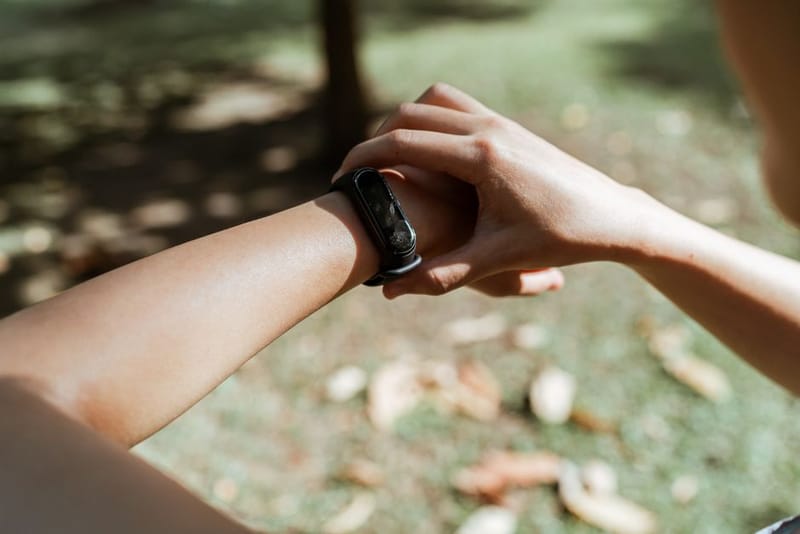
A smart ring and a basic fitness tracker band (a screen-equipped wristband like the Fitbit Inspire or Xiaomi Smart Band class) are not really competing for the same job. The band is a cheap, screen-first device built around steps and live workout feedback. The ring is a screen-free recovery instrument you barely notice. Knowing which problem you are solving is most of the decision.
Smart ring vs fitness band at a glance
- Sleep & HRV tracking
- Ring wins - worn comfortably all night, deeper recovery and HRV analysis
- Live workout heart rate
- Band wins - on-wrist screen shows real-time HR mid-workout; rings have no display
- Steps & daily activity
- Band wins - glanceable step count on the screen without opening an app
- Discretion & comfort
- Ring wins - no screen, nothing on your wrist, comfortable in bed
- Battery life
- Roughly even - both last days, the longest rings (10-12d) beat most bands
- Price
- Band wins - around £30-£85 vs £200-£350 for a flagship ring
What does each one actually measure well?
The hardware decides the strengths. A band sits on your wrist with a screen, so it is built for things you check during the day: steps, live heart rate while you exercise, notifications, and a workout timer you can see. A ring sits on your finger with no screen, so it is built for things measured continuously and reviewed later: sleep stages, overnight HRV (heart-rate variability, the beat-to-beat variation that signals recovery), resting heart rate, and a daily readiness score.
Neither is "more accurate" across the board. For continuous resting and overnight signals, the ring's finger placement and snug fit give it an edge. For active-exercise heart rate, a wrist band's larger sensor and on-screen feedback are more practical, even if a chest strap still beats both - see our accuracy vs chest strap guide.
Which is better for sleep tracking?
The ring wins this one clearly, and it is the main reason to choose one. A band is a chunk of plastic and glass on your wrist; plenty of people find it uncomfortable in bed and take it off, which means no data at all. A ring is light enough to forget, so it actually captures every night. On top of that, the recovery science in apps from Oura and Ultrahuman is more developed than the sleep scoring on most budget bands. If sleep and recovery are your priority, the ring is the upgrade.
Which is better for workouts and steps?
The band wins here, and it is not close for active exercise. A screen on your wrist shows live heart rate, pace and a workout timer while you train, which a ring simply cannot do - there is nowhere to display it. Bands also make daily steps glanceable without opening your phone, which is a genuine motivator for a lot of people. A ring still counts steps and detects workouts, but you review the numbers afterwards in the app rather than mid-effort. For someone whose main goal is moving more and tracking gym or run sessions, a band does the job for far less money.
How do battery life and price compare?
Battery: roughly even, with an edge to the longest rings. Most bands last around 5-14 days depending on screen use; smart rings run 4-12 days, with RingConn Gen 3 at the top. Our battery comparison has the full numbers.
Price: the band wins decisively. A capable fitness band costs roughly £30-£85, and none charge a subscription. A flagship smart ring is £200-£350, and Oura adds a monthly fee on top. Over three years that gap is several hundred pounds - the band is the budget choice by a wide margin, while the ring is a considered purchase for people who value what it does at night.
Who should buy which?
Three honest recommendations:
Buy a fitness band if you want a screen, live workout heart rate, glanceable steps, and the lowest price. It is the best first wearable for most people who mainly want to move more and track exercise.
Buy a smart ring if your priority is sleep, recovery and HRV, you want something discreet and comfortable overnight, and you are happy to review data in an app rather than on your wrist. Start with our best smart rings picks.
Consider both only if you are a data enthusiast who wants live workout metrics by day and deep recovery tracking by night - a band on the wrist plus a ring on the finger. For almost everyone that is overkill; pick the one that matches your main goal.
Frequently asked questions
Is a smart ring better than a fitness tracker band?
Can a smart ring replace a fitness band?
Which is cheaper, a smart ring or a fitness band?
Do smart rings count steps like a fitness band?
Which is more accurate for heart rate?
See our top smart ring picks
Compare the best rings for sleep, recovery and value.
Smart Ring vs Smartwatch
Smart Ring vs Whoop Strap UK 2026

Smart Ring Accuracy vs Chest Strap
Best Smart Rings 2026