Ultrahuman vs Oura Patent Dispute Explained (2026)
Oura sued Ultrahuman at the US ITC over smart-ring patent infringement. What's been ruled, what's pending, and what UK buyers should actually do about it.

What did Oura actually accuse Ultrahuman of?
Oura's two ITC complaints (filed via the Section 337 mechanism, which the ITC uses to investigate alleged unfair imports into the US) target what Oura describes as the core sensor-and-form-factor patents underpinning its smart ring. Public-record claims focus on:
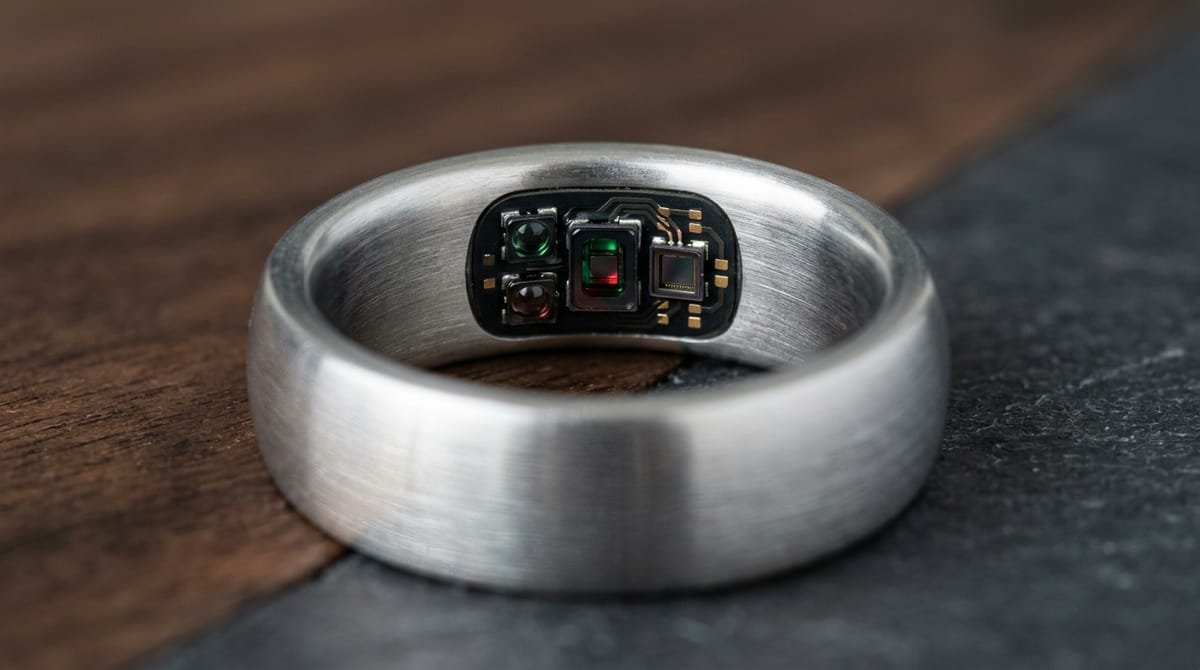
Ring-shaped wearable form factor with PPG sensors arranged on the inner surface. Oura argues the geometric arrangement of LEDs and photodiodes inside a continuous ring band is covered by US Patent 11,317,816 and related filings.
Sleep-staging methods that combine PPG-derived heart-rate variability with accelerometer movement data to infer sleep stages. Oura claims method patents covering the specific algorithm-architecture combination.
Heart-rate-variability calculation approaches that take an interbeat-interval (the gap between two consecutive heartbeats, measured by the PPG sensor) signal and process it into a daily HRV trend.
Ultrahuman's defence has run two lines: that the asserted claims are invalid (overly broad given prior art going back to earlier optical-heart-rate research), and that the Ring Air's specific implementation falls outside the patent claims as construed. Both sides have engineering experts on file with the ITC; the public docket is the authoritative source - see usitc.gov investigation 337-TA-1391 for the primary documents.
What has the ITC actually ruled?
The ITC issued an Initial Determination on certain Oura patents finding infringement in late 2024 and again in 2025 on a follow-on complaint. An Initial Determination is the administrative law judge's first-pass finding, not a final decision - it is reviewed by the Commission and then by the Federal Circuit on appeal. The current public-record state as of mid-2026:
Some asserted patents have been found infringed at the Initial Determination stage; others have been invalidated or found non-infringed.
The ITC's standard remedy for found infringement is a limited exclusion order barring import of the infringing product into the US. Ultrahuman has continued shipping software updates and hardware to US customers under ongoing appeals - the practical effect of any exclusion order depends on whether the redesigned units (Ring Air with workaround firmware) are deemed colourably different from the units the ITC found infringing.
Ultrahuman has appealed. Federal Circuit decisions in similar consumer-electronics ITC cases typically take 12-18 months from notice of appeal.
Does any of this affect UK buyers?
Directly, almost none of it. Three reasons:
ITC jurisdiction stops at US imports. Any exclusion order applies to Ultrahuman's US import operations. Ring Air units shipped to UK retailers (Ultrahuman direct, Amazon UK, John Lewis) come through different supply chains and are unaffected.
Software keeps shipping worldwide. Whatever the ITC decides on hardware imports, Ultrahuman has continued releasing app updates and feature additions to all customers globally. Your existing Ring Air does not stop working when an ITC determination drops.
Oura's UK / European litigation has not produced an injunction. Oura has filed parallel actions in some European jurisdictions; none has produced a UK injunction against Ring Air sales as of mid-2026. The public record is moving but slow.
The honest position for a UK buyer: if you want the Ring Air today, the patent dispute is essentially background noise. If you are pessimistic about Ultrahuman's long-term hardware-support runway (5+ year battery replacement, multi-year app maintenance), it is a fair input to the buying decision - but our Ring Air review already discusses Ultrahuman's relatively short company history (founded 2018) as a separate consideration, independent of the litigation.
What does this say about the smart-ring category?
Two things worth noting beyond the Oura-Ultrahuman specific dispute.
First, the patent landscape is contested. Smart rings sit at an awkward intersection of wearable-device patents (mostly owned by Apple, Fitbit/Google, Samsung), optical-sensor patents (held by sensor manufacturers like AMS Osram), and rich AI-on-device claims that newer entrants are starting to file. Oura's success at the ITC could embolden them - or trigger counter-claims that surface other smart-ring patents currently held back. The category is one or two enforcement rulings away from a Samsung-vs-Apple-style patent war.
Second, the dispute hasn't reshaped buying advice yet. Across the leading smart rings (Oura Ring 4, Ultrahuman Ring Air, Samsung Galaxy Ring, RingConn Gen 2, Amazfit Helio Ring), the practical accuracy and feature differences continue to dominate. We have not seen the dispute push individual buyers away from Ultrahuman in any meaningful way - the people who buy Ring Air do so for the no-subscription pricing and the metabolic-health features, and those reasons remain valid regardless of how the patent docket resolves.
If you are buying primarily for sleep tracking, our sleep-tracking pick covers the data-quality case. If you care most about battery life, our battery rankings are unaffected by the litigation.
Frequently asked questions
Has Ultrahuman lost the Oura lawsuit?
Will Ring Air be banned in the UK?
Should I avoid buying Ultrahuman because of the lawsuit?
Is my existing Ring Air going to stop working?
Where can I follow the case?
Ultrahuman Ring Air Review
Oura Ring 4 Review
Best Smart Ring for Sleep Tracking 2026