Best Smart Ring for Sleep Tracking 2026: Honest Picks
Best smart ring for sleep tracking 2026, based on independent polysomnogram tests. The new Oura Ring 5 leads; Ring 4 and sub-free picks close behind.
What makes a smart ring good for sleep tracking?
Three things actually matter for the sleep numbers a smart ring reports.
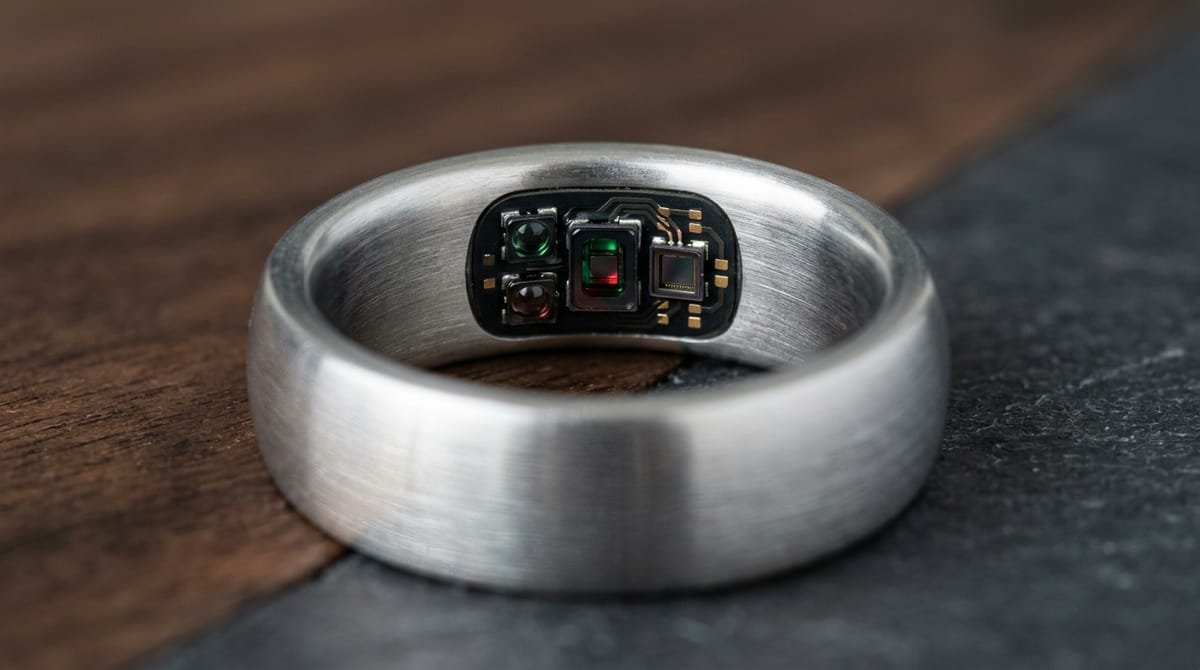
First, sensor sampling rate. Higher-frequency photoplethysmography (a finger-worn optical heart-rate-and-HRV reader, abbreviated PPG) produces a more responsive hypnogram - the trade-off is shorter battery life. Oura Ring 4 samples at the high end and pays for it with a 4-5 day battery; RingConn Gen 2 samples less often and pays you back with 10-12 days. Our sleep-stage accuracy explainer covers the underlying physics in more detail.
Second, algorithm sophistication. Two rings with similar raw sensor data can produce different sleep-stage breakdowns because their inference models differ. Oura has the largest internal training dataset (Oura claims tens of thousands of polysomnogram-validated nights); Ultrahuman is closer behind than the price gap suggests; the budget tier trades algorithm sophistication for battery and price.
Third, data presentation and trend tracking. The best sleep number is the two-week trend, not last night's score. Rings that surface trend data prominently are easier to use well; rings that surface only the single nightly score nudge users toward over-interpreting noise.
Which ring is most accurate against a sleep lab?
The most informative public dataset on smart-ring sleep accuracy is independent reviewer Quantified Scientist's head-to-head tests against a Zmachine Insight+ home PSG. His published epoch-by-epoch comparisons of the leading 2026 rings put sleep/wake agreement in the 85-90 percent range and four-stage agreement in the 65-75 percent range for the top models. The honest summary: total sleep time is the metric you can trust; stage breakdown is directional, not diagnostic.
The Oura Ring 5, released since those tests, runs the same sleep algorithms as the Ring 4, so its stage accuracy should match once independent lab comparisons appear. Until then the Ring 4 remains the validated benchmark, and the Ring 5's practical sleep edge is the added Nighttime Breathing sensor rather than better staging.
| Oura Ring 5 | Oura Ring 4 | Ultrahuman Ring Air | Samsung Galaxy Ring | RingConn Gen 2 | Amazfit Helio Ring | |
|---|---|---|---|---|---|---|
| Stage agreement vs PSG | Not yet lab-tested; same algorithms as Ring 4 | ~72-75% | ~68-72% | ~66-70% | ~62-68% | ~60-65% |
| Sleep/wake agreement | Expected to match Ring 4 | ~89-92% | ~87-89% | ~85-88% | ~83-86% | ~82-85% |
| Subscription | £5.99/mo for full features | £5.99/mo for full features | None | None | None | None |
| Battery | 6-9 days | 4-5 days | 4-6 days | 5-7 days | 10-12 days | 4-7 days |
| Best for | Newest Oura: slimmer fit + Nighttime Breathing | Highest data quality, willing to pay sub | Strong accuracy without subscription | Samsung ecosystem users | Budget pick + longest battery | Existing Amazfit watch owners |
Should you pay for Oura's subscription if sleep is your main use?
Probably yes, if you can carry the ~£72/year on top of the hardware cost. Without the membership Oura Ring 4 shows basic sleep duration and resting heart rate; the full sleep-stage breakdown, Readiness score and longer-term trend graphs sit behind the paywall. The membership is also where Oura's algorithm improvements ship - meaning the gap between Oura and the subscription-free rings widens slowly over time on the membership side and stays flat on the no-subscription side.
If the ~£72/year recurring cost is a deal-breaker, the Ultrahuman Ring Air is the next-best pick - close behind Oura on stage agreement, no subscription, full feature set on the hardware purchase. The subscription-free comparison covers the full picture.
How should you read your sleep data?
Establish a two-week baseline before reading nightly scores
The first two weeks of data are calibration - your ring learns your typical sleep pattern. Compare against your own baseline, not against a friend or a population average.
Believe total sleep time, treat stage minutes as directional
If your ring says you slept 6h 15m last night, that's probably within 10-15 minutes of the truth. If it says you got 90 minutes of deep sleep, that number carries several percentage points of error - useful for trend, not for hitting a target.
Watch trends, not single nights
One bad night of measured deep sleep is noise. A two-week downward trend in deep-sleep minutes against your baseline is the signal worth acting on - usually by adjusting caffeine timing, bedtime, or alcohol intake.
Cross-reference HRV when interpreting recovery
Sleep score plus HRV trend gives a much better recovery picture than either metric alone. Our HRV explainer covers what RMSSD vs SDNN actually capture.
Stop expecting clinical precision
Sleep apnoea, restless legs, parasomnia and circadian rhythm disorders cannot be diagnosed from a wrist or finger device. If you suspect any of these, a sleep study is the only reliable path - use the ring data as conversation input, not as evidence against the need for clinical medicine.
Frequently asked questions
Which smart ring is best for sleep tracking in 2026?
Are smart rings accurate enough to diagnose sleep problems?
Do you need Oura's subscription for sleep tracking?
Is RingConn Gen 2 accurate enough for serious sleep tracking?
What about smartwatches for sleep tracking?
Smart Ring Sleep Stage Accuracy: How Reliable Is It?
Smart Ring Battery Life Ranked 2026
Smart Ring Without a Subscription: 4 Worth Buying